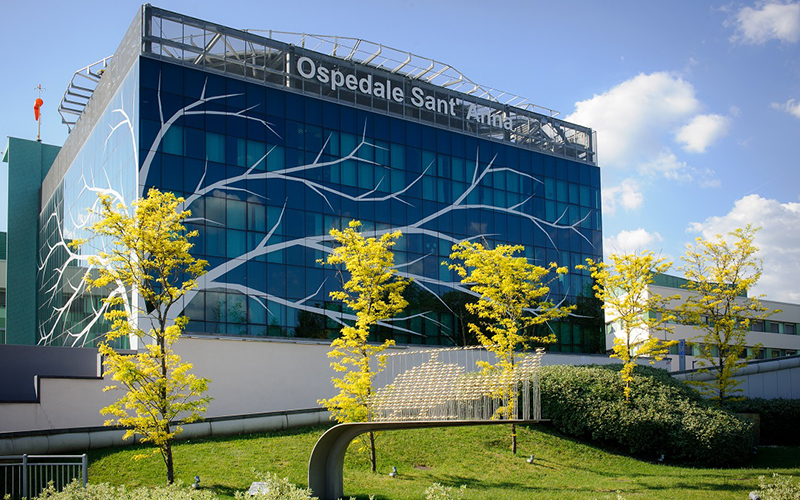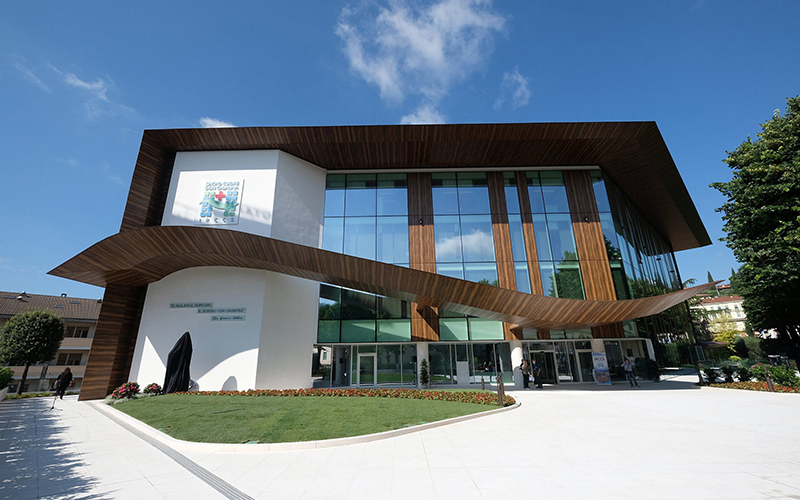
Ospedale Sacro Cuore Don Calabria
Verona
Italy

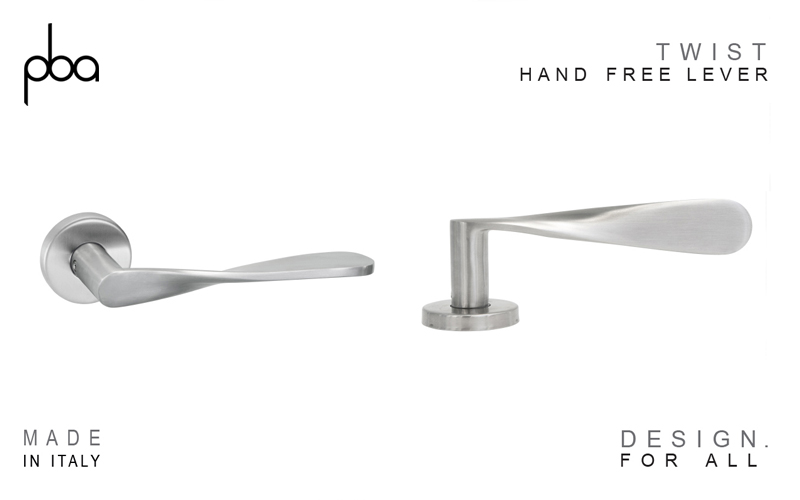
Der Twist-Türgriff dient zum handfreien Öffnen der Tür. Die verdrehte Form des Hebels bietet eine gute Stützbasis sowohl für den Ellbogen als auch für den Arm und erleichtert den Öffnungsvorgang. Der handfreie Türgriff kann sowohl für neue Projekte als auch zum Ersetzen vorhandener Griffe verwendet werden.
DESIGN FOR ALL
Der Twist-Griff garantiert dank der großen Auflage, eine einfache Handhabung von der auch Rollstuhlfahrern oder Personen mit eingeschränkten Bewegungsmöglichkeiten profitieren.
VERTIKALE INSTALLATION FÜR MONTAGE AN SCHIEBETÜREN
Vertikal an Schiebetüren installiert, ermöglicht es ein praktisches Öffnen der Tür, wobei anstelle der Hand der Ellbogen oder der Arm verwendet wird.
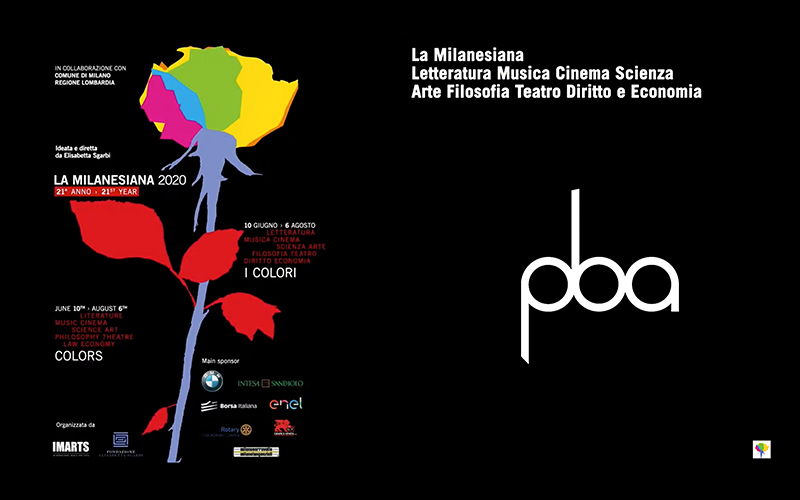
Literature Music Cinema Science Art Philosophy Theatre Law and Economy
Ideata e diretta da Elisabetta Sgarbi
Milano | 10 giugno – 06 Agosto 2020
La XXI edizione si terrà dal 10 giugno al 6 agosto con oltre 40 incontri, 115 ospiti italiani ed internazionali, 5 mostre 12 città e un tema, quello scelto da Claudio Magris, ‚I Colori‘.
La kermesse sarà aperta il 10 giugno con una serie di appuntamenti di ‚Aspettando La Milanesiana‘ in collaborazione con Corriere.it. Il 10 giugno in streaming ci saranno Thomas Piketty in dialogo con Ferruccio De Bortoli sui temi presenti nel nuovo saggio dell’economista, ‚Capitale e Ideologia‘ edito da La Nave di Teseo. Un appuntamento in collaborazione con la Fondazione Giangiacomo Feltrinelli.
Il 15 e 16 giugno due incontri in streaming avranno come protagonista lo spazio e la scienza con gli astronauti italiani Samantha Cristoforetti e Luca Parmitano e due lectio sui colori dello spazio.
A Milano dal primo luglio al via gli appuntamenti dal vivo, con ingresso libero fino a esaurimento posti, con lo spettacolo di Massimo Lopez e Tullio Solenghi nel cortile del Castello Sforzesco.
Il cortile di Palazzo Reale ospiterà il 27 luglio ‚I colori della nostra vita. Questo virus che rende folli‘, spettacolo di Bernard – Henri Lévy introdotto da Maurizio Molinari.
Il 29 luglio nel chiostro del Piccolo Teatro Grassi andrà in scena una lettura collettiva di La Tregua di Primo Levi.
Il 25 luglio il cortile di Palazzo Reale ospiterà ‚I Colori di Fabrizio De André‘, la proiezione del documentario di Walter Veltroni ‚Fabrizio De André e Pfm – Il concerto ritrovato‘, con letture di Dori Ghezzi e dello stesso Veltroni.
A Casalpusterlengo, in provincia di Lodi nella ex zona rossa, il 15 luglio Vittorio Sgarbi terrà una lectio sui tesori dell’arte di Lodi, Codogno e Casalpusterlengo.
A Sant’Arcangelo di Romagna il 4 agosto Vittorio Sgarbi terrà una lectio illustrata su Guido Cagnacci, Tonino Guerra e Federico Fellini, con il prologo musicale degli Extraliscio che hanno realizzato anche la nuova sigla della rassegna.
Il 30 luglio al Museo Madre di Napoli si terrà l’apertura della mostra ‚Nuvole e colori‘ che raccoglie alcune fotografie di Carlo Verdone, attore e regista, che dialogherà per l’occasione con Paolo Mereghetti.
More information http://www.lamilanesiana.eu
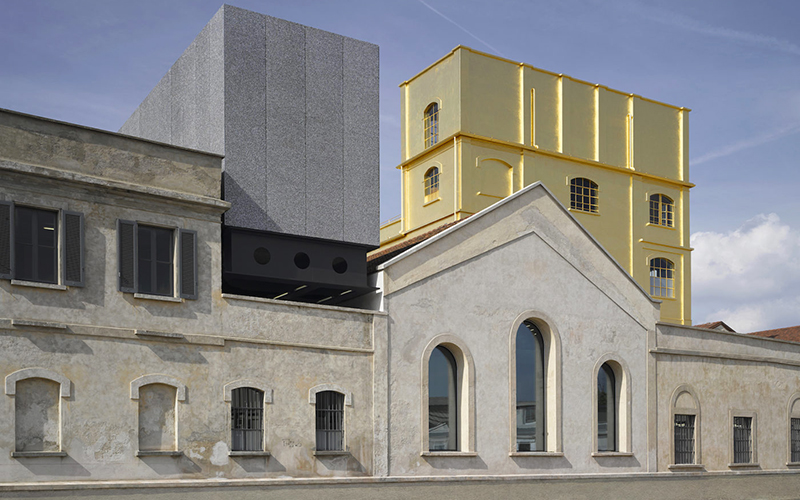
Project: Osservatorio Fondazione Prada
Architects: Prada and OMA – Office for Metropolitan Architecture
Location: Milano – Italy
Heutzutage müssen wir proaktiv sein, um gesündere Umgebungen mit reduzierten Möglichkeiten zur Übertragung von Keimen und Viren zu schaffen.
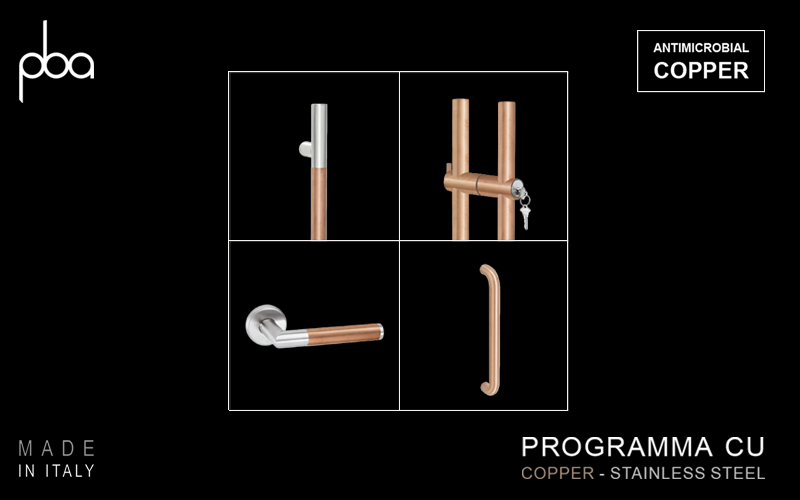
Die neue Serie pba® CU + Edelstahl zeigt, dass die Verwendung von Produkten mit elegantem und zeitgemäßem Design aus bestem Material eine wichtiger Beitrag für das Problem der Reduzierung von Kontaminationen und einer saubereren und gesünderen Umwelt darstellt.
In der Serie CU + Edelstahl können Designer zwischen Stoßgriffen, Türdrückern, Griffe mit und ohne Verschluss und Locksets für Glastüren aus reinem Kupfer (99,9%) oder reinem Kupfer und Edelstahl 316L für Glas- Metall/PVC Türen und Fenster wählen.
Wir haben diese Serie unter Verwendung der besten Stähle, Edelstahl 316L und dem besten antimikrobiellen Material, Kupfer, entwickelt. Ziel ist es, qualitativ hochwertige Produkte mit hervorragenden mechanischen und antimikrobiellen Eigenschaften zu erhalten. Die antimikrobiellen und antibakteriellen Eigenschaften von Kupfer gegenüber verschiedenen der häufigsten pathogenen Mikroorganismen, einschließlich MRSA (S.A. AKA STAPH) und E.COLI, sind wissenschaftlich belegt.
Das NEW ENGLAND JOURNAL OF MEDICINE berichtete, dass Kupfer im Vergleich zu anderen Materialien, Viren deutlich weniger Lebensraum bietet.
CU + Edelstahlprodukte können als Teil eines Plans für eine sauberere und hygienischere Umgebung dienen. Insbesondere für öffentliche Plätze und Gemeinschaftsbereiche wie Büros, Besprechungsräume, Hotels und in der Gesundheitspflege.
Laden Sie den neuen Katalog pba CU + Edelstahl herunter und besuchen Sie für weitere Informationen unsere Website.
Download pba CU + Stainless Steel Katalog
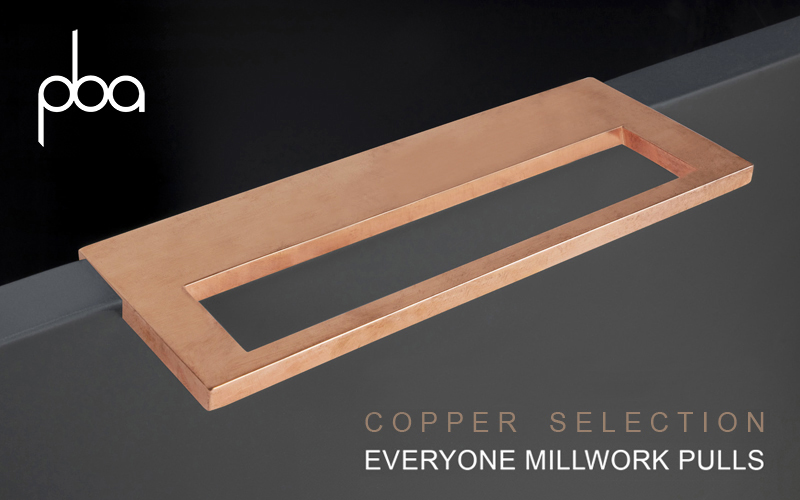
Everyone Millwork Pulls from pba have become a go-to solution for interiors professionals and cabinetmakers since their 2018 introduction. Originally offered and still available in top-grade stainless steel, they meet the ada accessibility requirements and support inclusion beautifully.
Now our pulls are better than ever with a brand new option: copper plating, where an alloy consisting of 97% pure copper is applied without coating to a steel core to create an always-on, antimicrobial defense against a range of pathogens including MRSA, S. Aureus (A.K.A. Staph), and E. Coli.
The New England Journal of Medicine recently reported that copper, when compared to other materials including plastic and stainless steel, is also dramatically less hospitable to virus. With all this and good looks, too, pba copper millwork pulls can be part of a comprehensive plan for a cleaner, more hygienic environment—and especially relevant in high-touch, multi-occupant spaces such as kitchens, pantries, meeting rooms, and hotel guest rooms.
Note: all products comply with the ada and similar accessibility requirements, however final interpretation of accessibility compliance is the responsibility of the specifier and should be determined according to specific project conditions and local codes.
Download Everyone Millwork Pulls Brochure
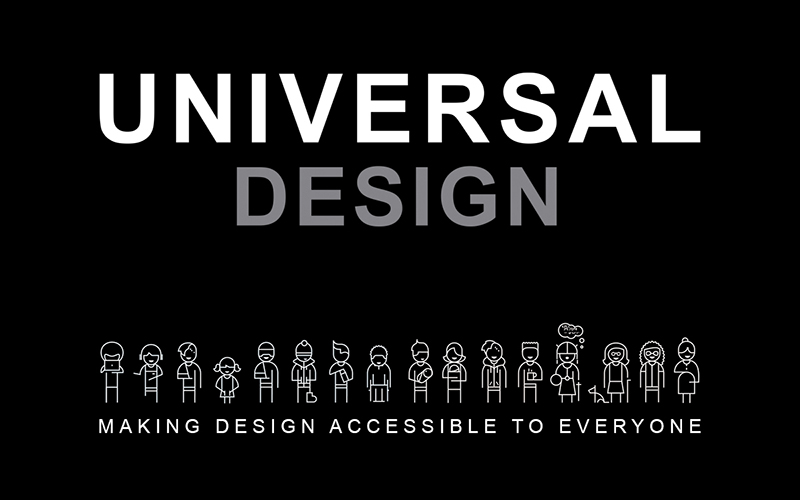
MAKING DESIGN ACCESSIBLE TO EVERYONE
At pba we strongly believe that the form of an object not only establishes its function, but it also gives a clear indication of how the designers look at the world. Nowadays there can’t be any human activity, including the design of a new object, that doesn’t take into consideration the responsibility of its effect and of its consequences on the world.
We declare our intention to continuously pursue sustainability and accessibility of what we do with an even wider and more durable approach. The products we design and manufacture for a “life without barriers” must fulfill inclusion and accessibility and are considered a success only if they are intended to be for everyone: not for a particular category of users, but for all men and women living in a comfortable space.
The Design For All bathroom accessories and the many products of our Architectural Hardware range are designed with the purpose to be inclusive: our wish is to make excellence accessible to everyone.
According to the Centre for Excellence in Universal Design, Universal Design is the design and structure of an environment that can be understood, accessed, and used to the greatest extent possible by all people, regardless of their age or ability.
That means that when designers think about and plan around people’s diverse needs and abilities, they can create products and environments that actually meet those needs and abilities.
In 1997, Ronald Mace led a working group of architects, product designers, engineers, and environmental design researchers, to create the 7 principles of universal design to help guide the design process of environments, products and communications.
Principle 1: Equitable Use. The design is useful and marketable to people with diverse abilities.
Principle 2: Flexibility in Use. The design accommodates a wide range of individual preferences and abilities.
Principle 3: Simple and Intuitive Use. Use of the design is easy to understand, regardless of the user’s experience, knowledge, language skills, or current concentration level.
Principle 4: Perceptible Information. The design communicates necessary information effectively to the user, regardless of ambient conditions or the user’s sensory abilities.
Principle 5: Tolerance for Error. The design minimizes hazards and the adverse consequences of accidental or unintended actions.
Principle 6: Low Physical Effort. The design can be used efficiently and comfortably and with a minimum of fatigue.
Principle 7: Size and Space for Approach and Use. Appropriate size and space is provided for approach, reach, manipulation, and use regardless of user’s body size, posture, or mobility.