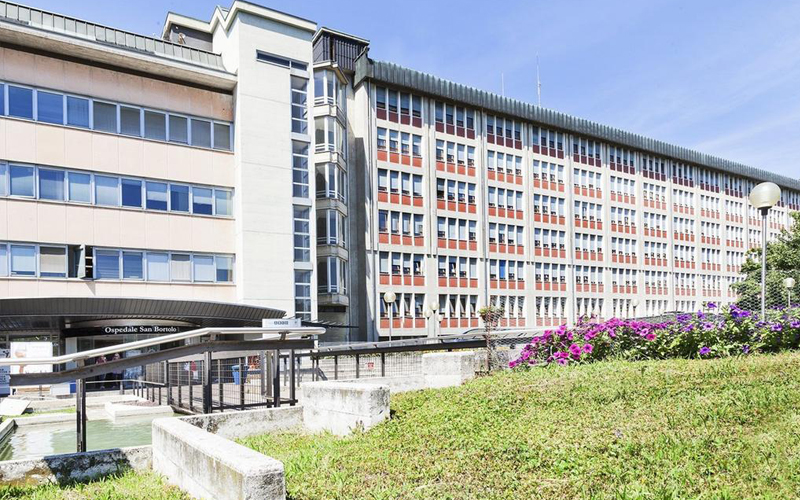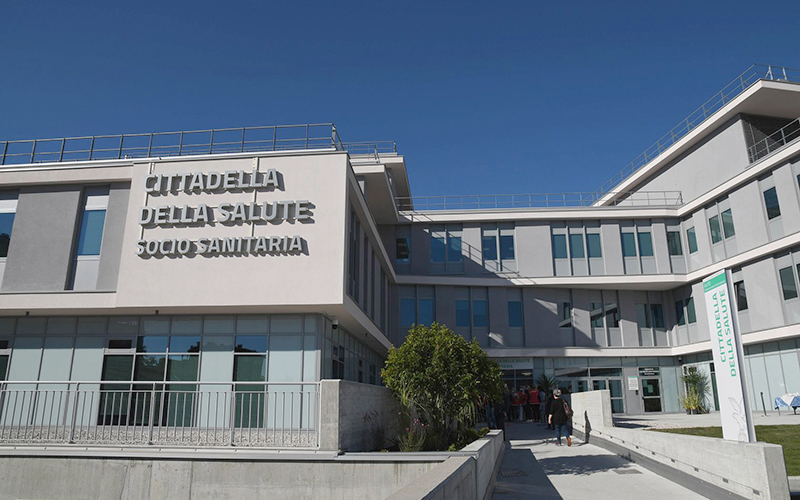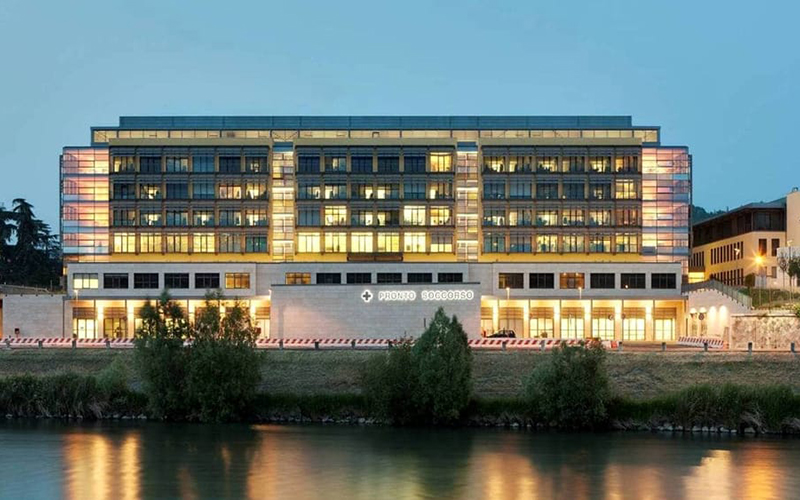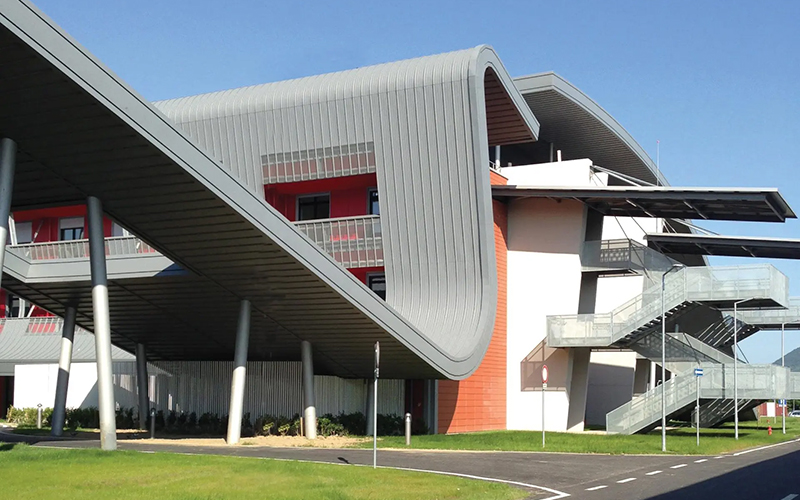
Ospedale Madre Teresa di Calcutta
Padova
Italy

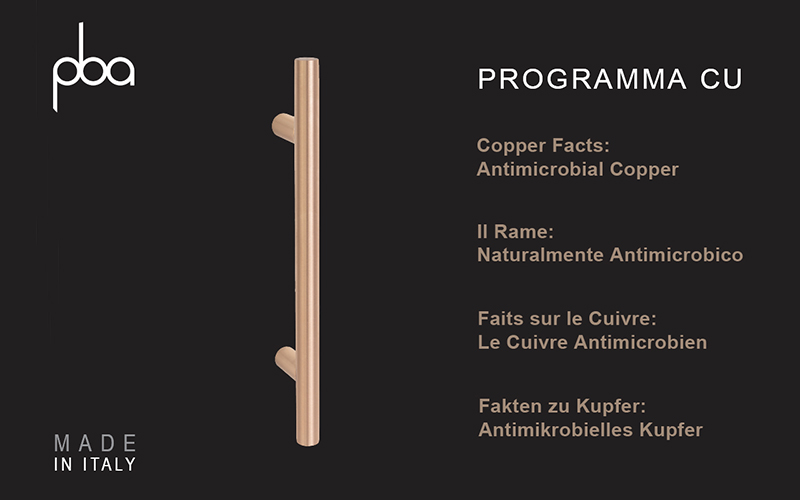
Copper has a natural antimicrobial efficacy against most common bacteria. Independent laboratory tests show that, when cleaned regularly, copper kills greater than 99.9% of the following bacteria within 2 hours of exposure: Methicillin-resistant Staphylococcus aureus (MRSA), Vancomycin-resistant Enterococcus faecalis (VRE), Staphylococcus aureus, Enterobacter aerogenes, Pseudomonas aeruginosa, and E. coli O157:H7.
These bacteria are considered to be representative of the most dangerous pathogens capable of causing severe and often fatal infections.
The Centers for Disease Control and Prevention (CDC) estimates that infections acquired in U.S. hospitals affect two million individuals every year and result in nearly 100,000 deaths annually. The use of copper alloys for frequently touched surfaces, as a supplement to existing CDC-prescribed hand-washing and disinfection regimens, has far-reaching implications.
Potential uses of the copper where it can help to reduce the amount of disease-causing bacteria in healthcare, public spaces and generally in high attendance facilities includes door and furniture hardware.
Download Programma CU Anti-Microbial Copper Brochure
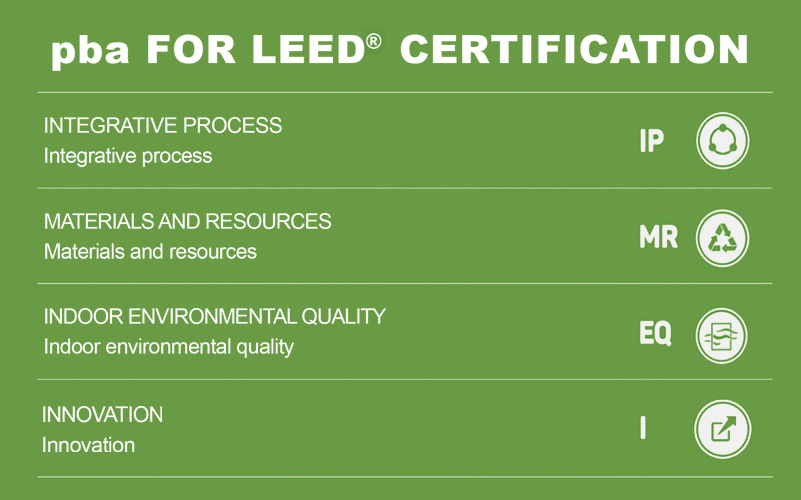
LEED – Leadership in Energy Environmental Design – is a voluntary certification system for the management, design and construction of buildings that are sustainable from a social, environmental and economic point of view and in terms of the wellbeing of the users. Established in the United States in 1993 by the U.S. Green Building Council (USGBC), LEED is now the most widespread building sustainability certification standard in the world. It considers every field that involves the design and management of buildings or neighbourhoods, both commercial and residential new or undergoing requalification.
pba products contribute toward satisfying prerequisites and credits under LEED:
INTEGRATIVE PROCESS
MATERIALS AND RESOURCES
INDOOR ENVIRONMENTAL
QUALITY INNOVATION
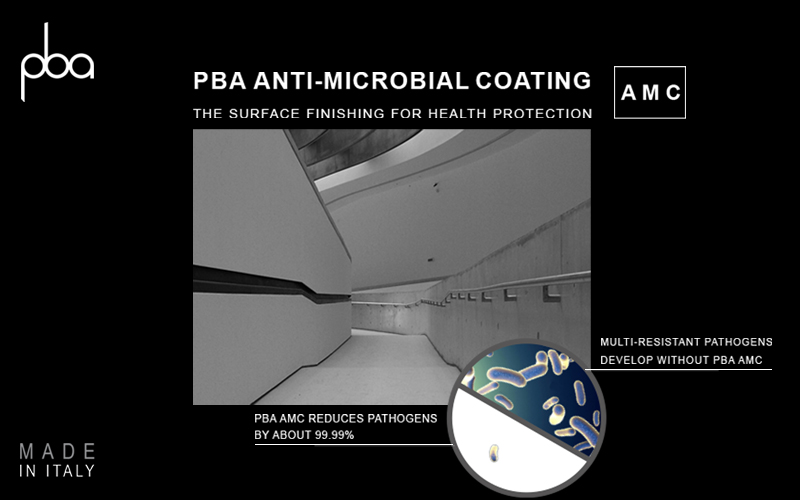
pba introduces PBA ANTI-MICROBIAL COATING -The surface finish for health protection suitable for all stainless steel and aluminum products, as well as for our medical devices 400 program (400-ALU, 400-SS).
pba ANTI-MICROBIAL COATING (AMC) is an innovative finish, highly recommended for all high attendance environments where hygiene is extremely important like hospitals, offices and public spaces in general.
pba ANTI-MICROBIAL COATING (AMC) contains special additives that make the surface protected from bacteria and microorganism. Tests show that on untreated surfaces microbes and bacteria can easily proliferate, while on AMC surfaces bacterial proliferation is practically zeroed.
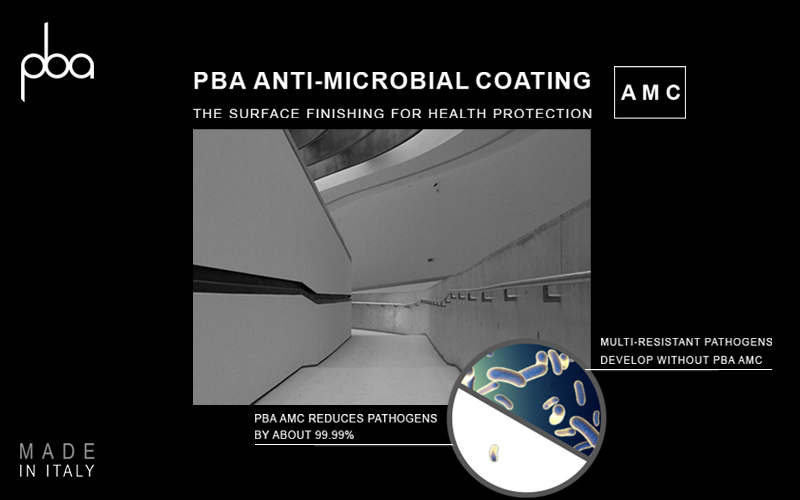
Surfaces with pba ANTI-MICROBIAL COATING (AMC) have been tested to be active against gram-positive (Staphylococcus aureus – MRSA, Bacillus subtilis, Streptococcus daecalis, and others) and gram-negative bacteria (Escherichia coli – ESBL, Legionella pneumophila, Pseudomonas aeruginosa and others).
All pba Stainless Steel and Aluminum products are offered with pba ANTI-MICROBIAL COATING (AMC).
ARCHITECTURAL HARDWARE – All stainless steel and aluminum products: handrail, levers, pulls, locking and non-locking ladder pulls, lockset for frameless glass door, signage and door accessories.
DESIGN FOR ALL – Stainless Steel range PROGRAMMA 400-SS and Aluminum range PROGRAMMA 400-ALU.
pba sostiene il progetto di restauro e la Venice Gardens Foundation
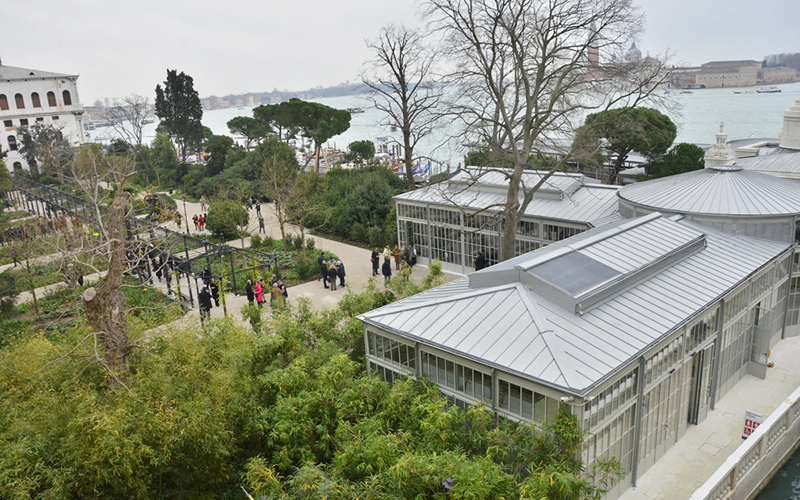
I Giardini Reali di Venezia, connessi nuovamente a Piazza San Marco, si estendono per una superficie di circa 5.000 metri quadrati, si affacciano sul Bacino marciano e sono circondati da canali sui quali prospettano anche il Museo Correr, le Sale Imperiali del Palazzo Reale, il Museo Archeologico Nazionale e la Biblioteca Marciana.
Dagli anni ’50 del secolo scorso i Giardini napoleonici, di grande pregio e motivo di vanto della città per tutto l’Ottocento, avevano perso progressivamente l’equilibrato rapporto con le architetture contigue e da qualche decennio versavano in stato di grave difficoltà, tanto da renderne quasi illeggibile la geometria e la composizione originarie. Anche il Padiglione neoclassico, realizzato dall’architetto Lorenzo Santi tra il 1816 e il 1817, riportava evidenti criticità, mentre il pergolato ottocentesco in ghisa, la cancellata e lo storico ponte levatoio erano in stato di abbandono, così come gli edifici incongrui costruiti negli anni all’interno del giardino.
Al fine di contrastare il progressivo decadimento del sito di notevole rilevanza storica e paesaggistica, nel dicembre del 2014, l’Agenzia del Demanio e la città di Venezia hanno concesso il Compendio Monumentale dei Giardini Reali a Venice Gardens Foundation affinché ne curasse il restauro e la conservazione nel tempo.
Dal 2015 al 2019 i Giardini sono stati dunque oggetto di un complesso restauro realizzato dalla Fondazione su progetto del giardiniere-architetto di giardini Paolo Pejrone, allievo di Russell Page e di Roberto Burle-Marx, e, per il restauro architettonico e di ripristino della Serra, su progetto dell’architetto Alberto Torsello, riprendendo i disegni degli architetti Carlo Aymonino e Gabriella Barbini.
Riaperti nel dicembre 2019, i Giardini Reali, rigogliosi e ricchi di prospettive inaspettate, hanno riacquistato pregio formale e complessità botanica, coerentemente con lo storico disegno ottocentesco. pba ha sostenuto il progetto di restauro ed è presente nelle zone dedicate ai servizi con gli accessori bagno in acciaio inox della linea Programma 400-SS.
Per maggiori informazioni www.venicegardensfoundation.org
Project: Nuovo Campus Bologna Business School
Architect: Mario Cucinella Architects
Location: Bologna, Italy
Programma 400-SS Stainless Steel