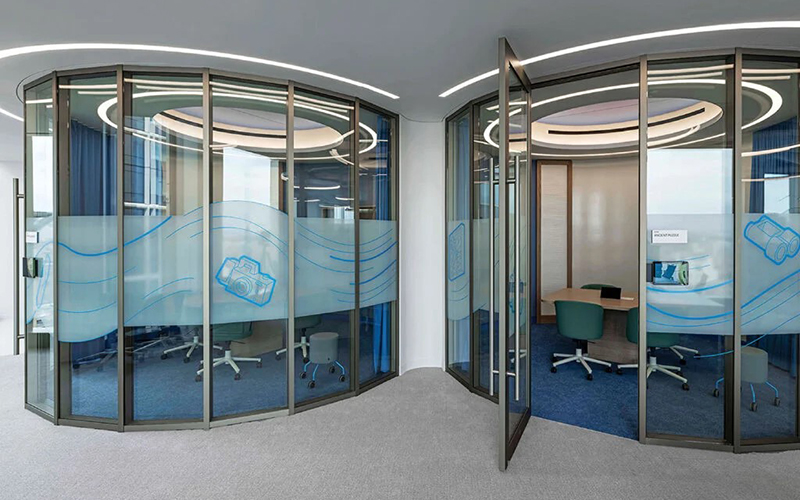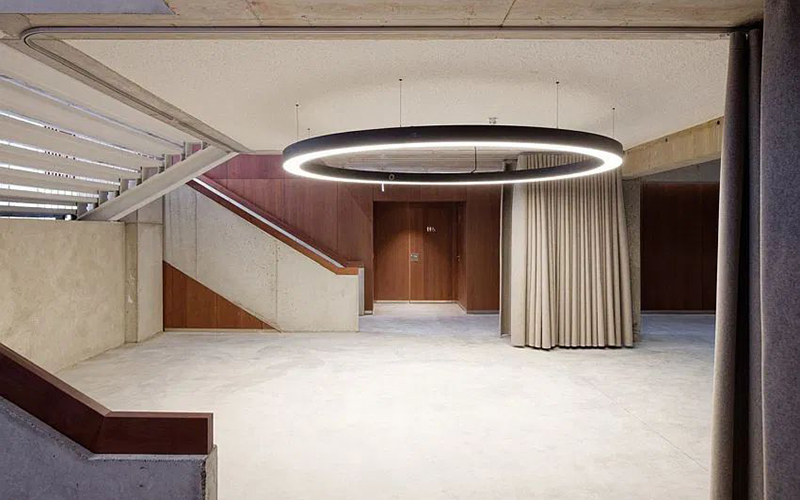
Project: AstraZeneca’s new research and development site
Architect: HOK
Location: Cambridge – USA

Project: AstraZeneca’s new research and development site
Architect: HOK
Location: Cambridge – USA
Discover the results of the innovative research conducted by pba and IUAV University of Venice.
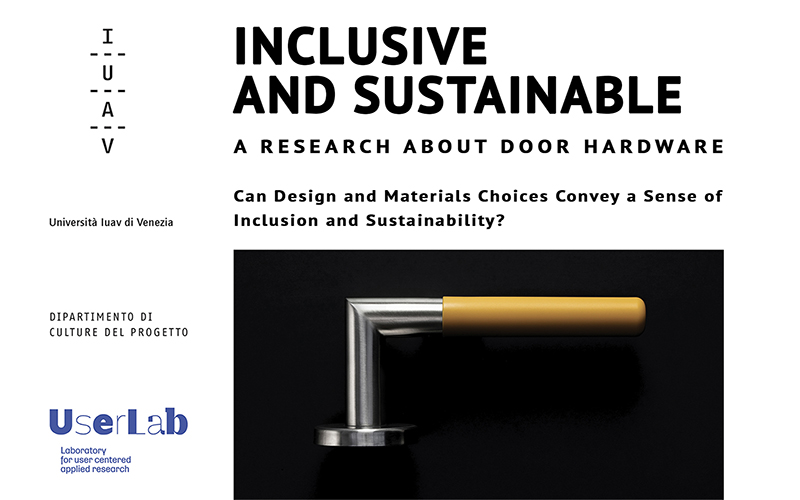
The research conducted by pba and IUAV University of Venice explores how inclusiveness and sustainability are represented through the TOCCO collection of door handles, made from steel and ECONYL®. The collection offers a wide range of colors and textures to accommodate various tactile and visual preferences, promoting a sensory-inclusive environment. ECONYL® nylon is used for its recyclability and eco-friendly properties, contributing to sustainability by repurposing waste materials.
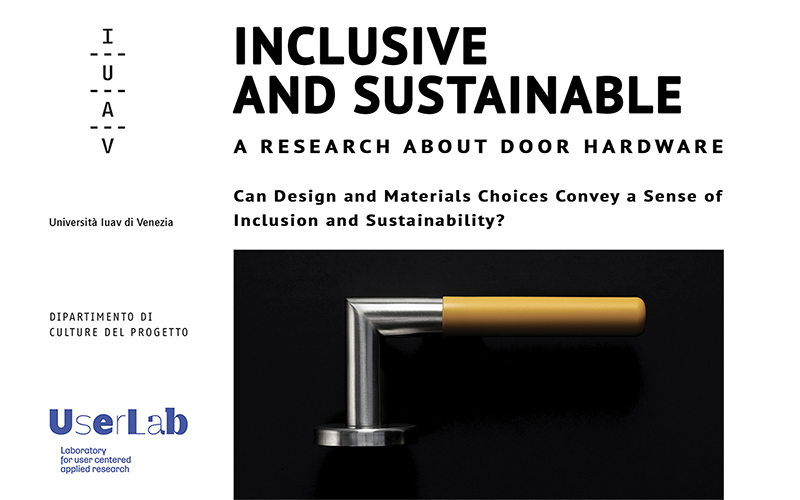
The project emphasizes the significance of social sustainability alongside economic and environmental aspects, recognizing the importance of neurodiversity in design. By fostering adaptable spaces, the design encourages participation and upholds the dignity for all individuals.
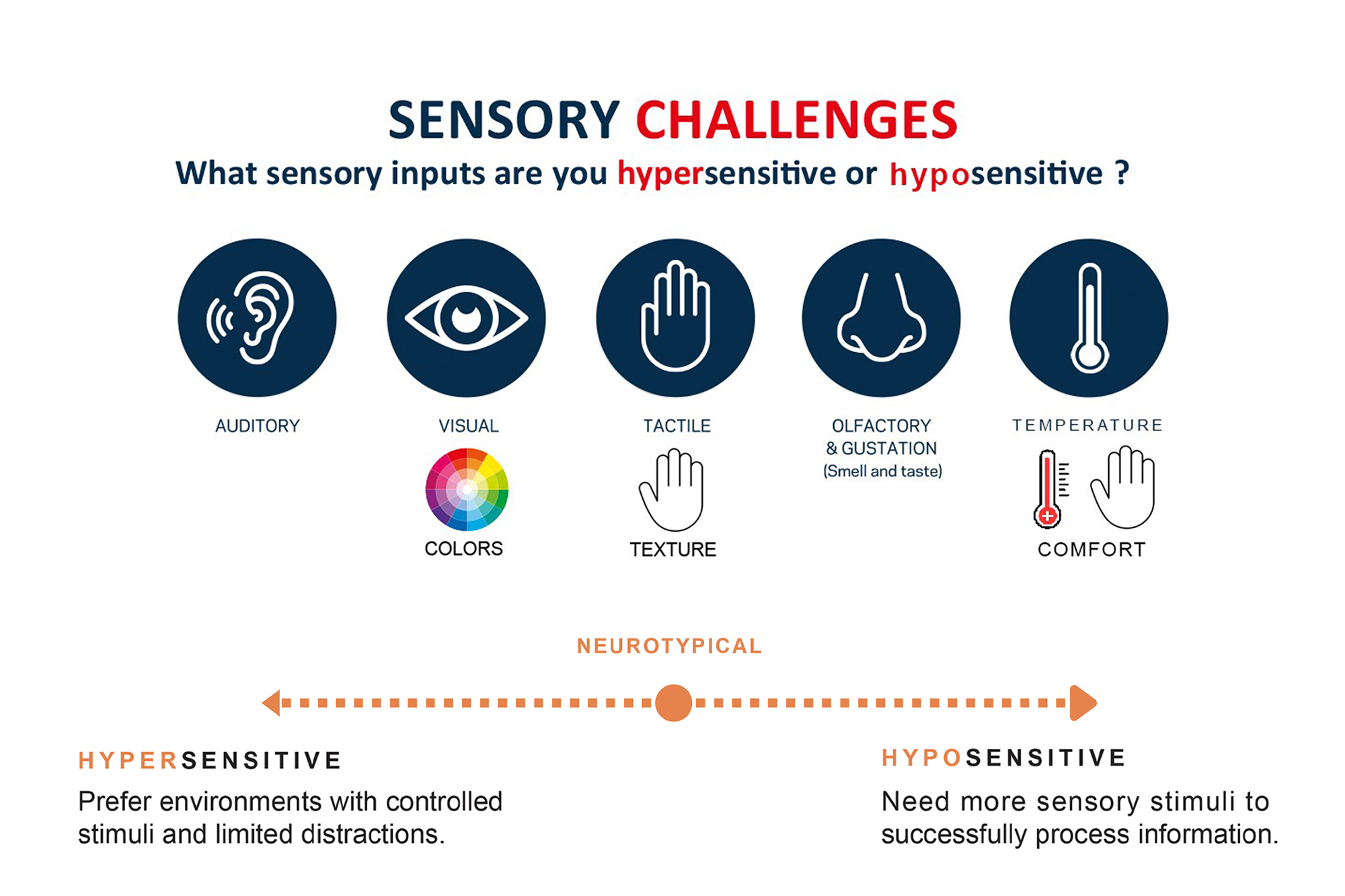
Implementing sustainable cooperation and participation, deeply rooted in culture, is closely linked to social sustainability. Sustainable development must consider a multitude of components, including economic, environmental, and social factors. While sustainability has often focused on economic and environmental aspects, it is increasingly essential to encompass social factors in discussions of community development. Moreover, when addressing inclusivity, it is vital to incorporate the needs of neurodiverse individuals. Sensory Inclusive Design aims to address the sensitivities of neurodiverse people towards perceptive and sensory stimuli.
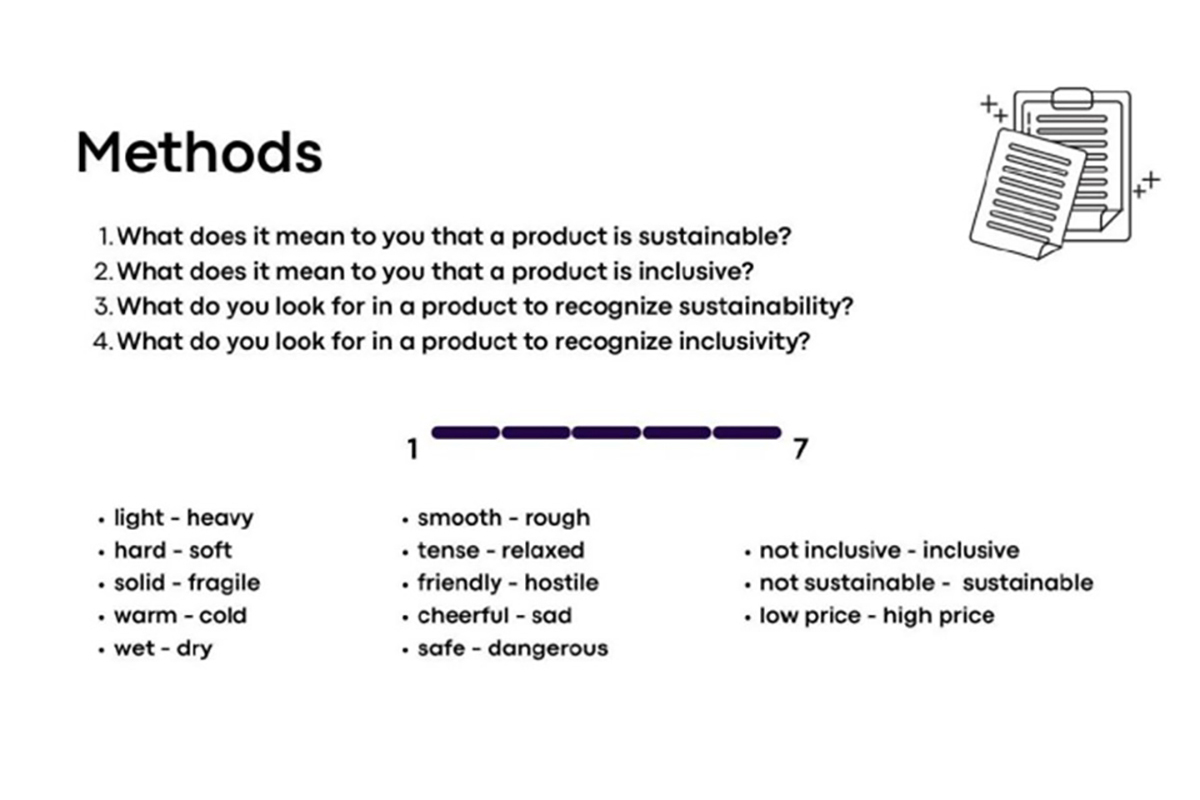
Additionally, the research aims to further explore perceptions of inclusivity and sustainability among different groups, classifying its components into measurable variables. A psychophysical study evaluated the significance of these variables in expressing inclusivity and sustainability, while a questionnaire was used to identify overlooked categories of inclusivity and their links to tertiary-expressive qualities. Overall, the project aims to deepen the understanding of inclusive and sustainable design and its impact on community well-being.
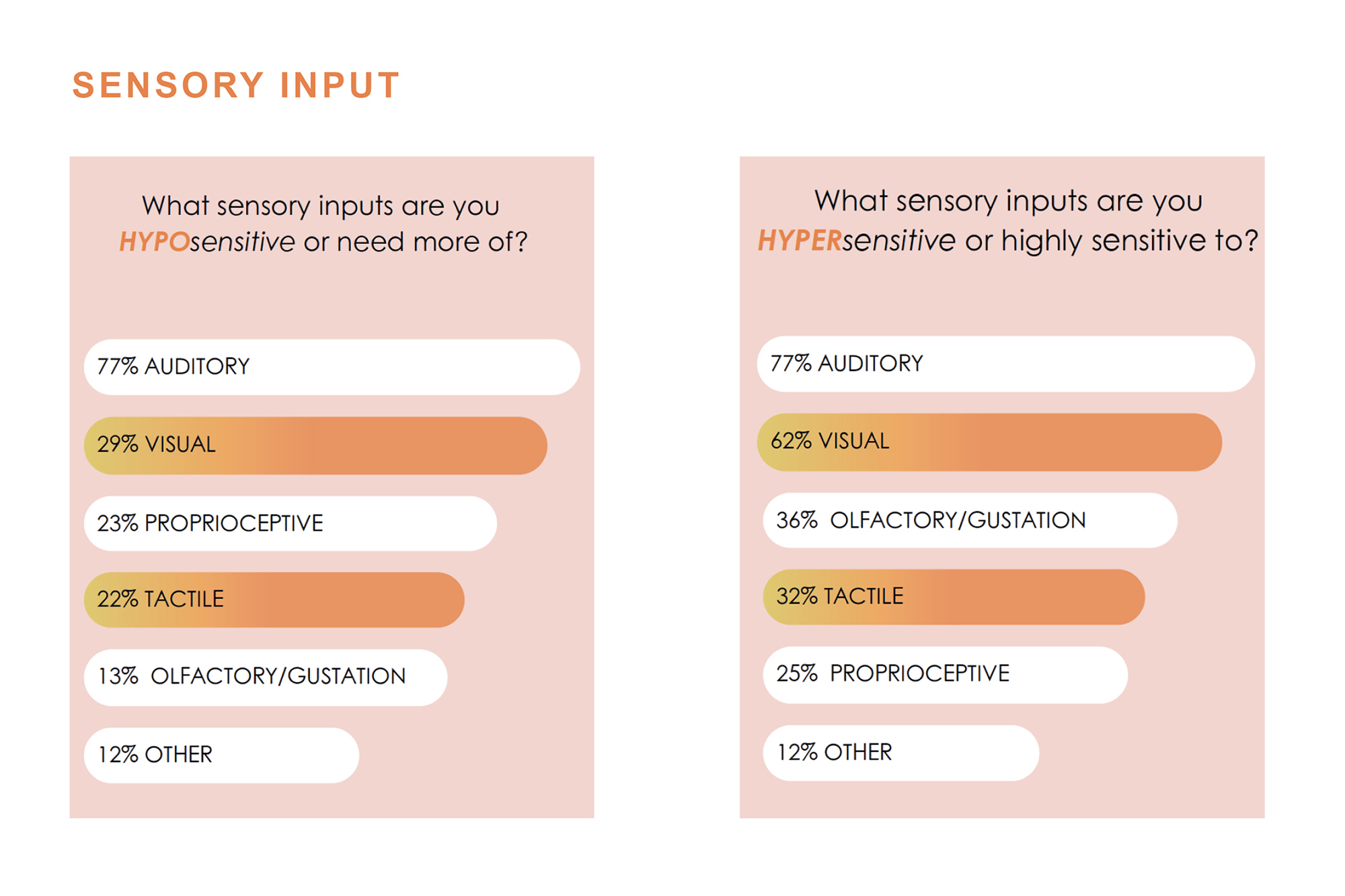
Furthermore, TOCCO hardware components are designed to be interchangeable and employ standard fixing systems, allowing them to be seamlessly integrated into renewal projects without the need to replace existing doors or components. This sustainable, interchangeable, and sensory-sensitive nature of the Tocco collection reflects a deep commitment to sustainability in all its aspects. By offering neurodiverse and neurotypical individuals the ability to choose from various situations and environments within the same space, designers can uphold dignity and autonomy. Creating versatile and adaptable environments not only accommodates individual preferences but also combats stigma and segregation, promoting equality and integration, which ultimately enhances perceived well-being. This holistic approach underscores the importance of inclusivity in interior design as a means of fostering sustainable and supportive communities.
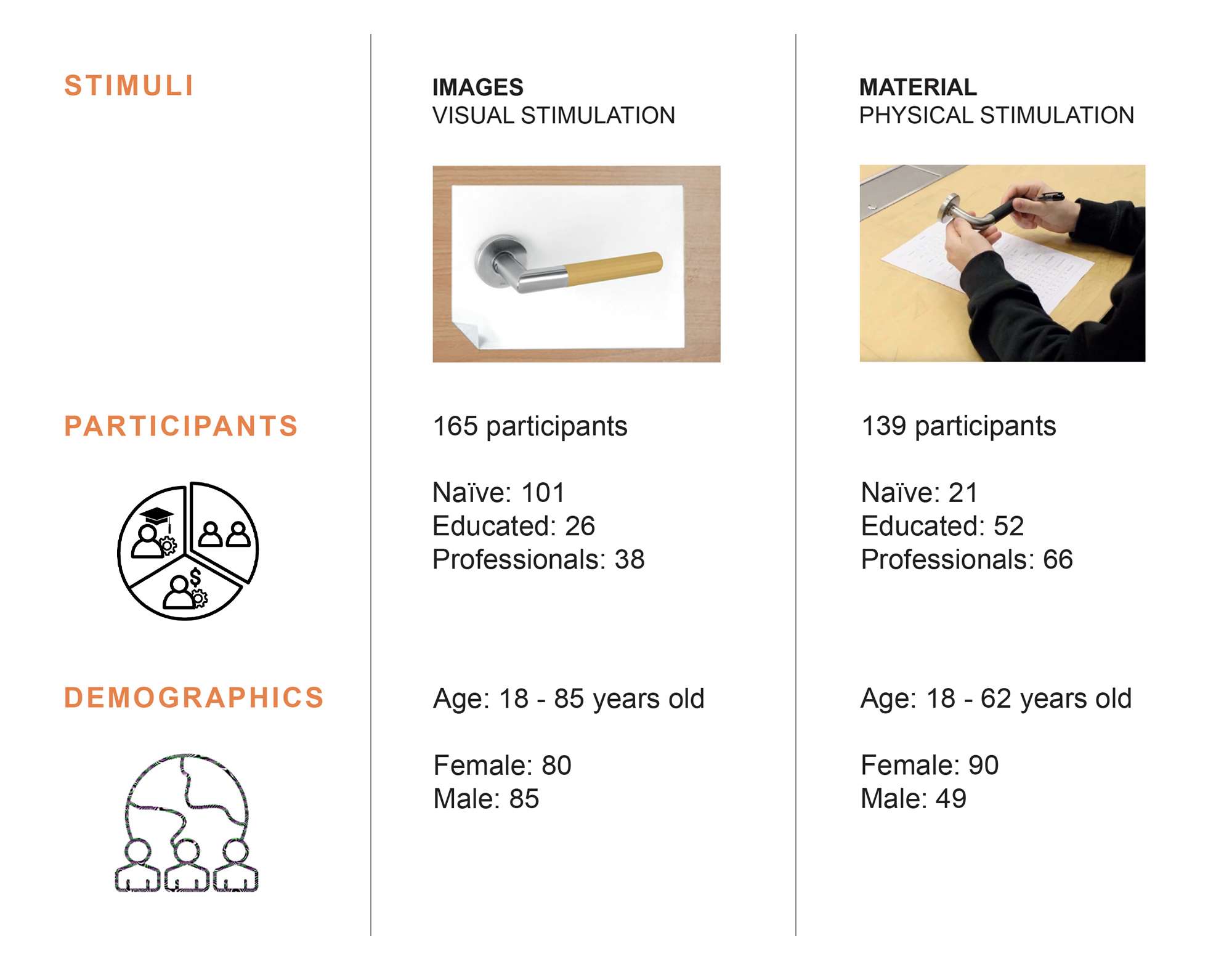
Discover the final results of the research about the communication of inclusiveness and sustainability of TOCCO Collection, through tertiary-expressive properties. Contacts our team to receive the Results Research Document: marketing@pba.it
The research results were presented during the Lectio Magistralis held at the University of Venice IUAV in the presence of the scientific committee of the Department of Architecture. During the event, Prof. Michele Sinico, Dr. Sophia Diaz, Dr. Samantha Barbolan, and Dr. Aristea Klanac shared the methods used and the outcomes achieved, engaging in a dialogue with Erica Anesi, CEO of pba S.p.A., and Maria Giovanna Sandrini, CCO of Aquafil S.p.A., about the role of sustainable and inclusive design and the importance of material choices in achieving sustainable development goals. They also discussed the need to explore these aspects not only from a technical standpoint but also by questioning how the values of inclusion and sustainability should be communicated to the design world.
To be contacted by our architectural representatives to present the results to your firm, please contacts our team: marketing@pba.it
Project: LEGO Group Boston Hub
Architects: BDG Architecture + Design
Location: Boston – USA
Les produits pba contribuent à l’obtention de crédits LEED, sont conformes aux normes REACH, portent l’etiquette Red List Free et disposent désormais d’une déclaration environnementale de produit (DEP), ce qui témoigne l’engagement continu de l’entreprise en faveur d’un avenir plus durable.
Le réchauffement de la planète et le changement climatique représentent l’un des défis les plus urgents de notre époque. Le secteur du bâtiment, qui est responsable de 40% de la consommation d’énergie et de 36% des émissions de gaz à effet de serre, joue un rôle important dans ce contexte. Il est donc évident que l’amélioration de l’efficacité énergétique des bâtiments est une priorité incontournable qui présente également des avantages pour les entreprises, les investisseurs et toutes les parties prenantes.
Pour faire face au changement climatique, il est essentiel de veiller à ce que les nouveaux bâtiments soient durables et efficaces sur le plan énergétique. La réduction des émissions du secteur du bâtiment, existantes et futures, peut offrir des avantages importants du point de vue de l’environnement, de la santé et du marché du travail et aussi d’un point de vue économique. Pour atteindre ces objectifs, les entreprises, les entrepreneurs du bâtiment, les législateurs et les responsables politiques doivent agir dans une perspective de large envergure.
Si le but d’une action change, l’action elle-même devient différente de ce qu’elle était auparavant. Cette nouvelle façon d’agir, qui est la seule façon d’avoir un avenir, peut et doit être certifiée. Les certifications de durabilité des bâtiments sont essentielles pour promouvoir la durabilité dans l’environnement bâti, établir des normes qui guident les stratégies des entreprises, stimuler l’efficacité du marché et accélérer le progrès législatif. Les certifications des bâtiments deviennent également essentielles sur les marchés immobiliers actuels, car elles augmentent la valeur du patrimoine, réduisent les coûts oprationnels et améliorent le bien-être des personnes.
Il existe dans le monde entier différents systèmes de certification ou d’étiquetage permettant de certifier l’impact des produits utilisés dans le secteur du bâtiment . Cette pluralité de systèmes peut rendre difficile la comparaison et la compréhension de l’impact environnemental réel de chaque produit. Les déclarations environnementales de produits (DEP) sont vérifiées par des tiers parties et respectent les normes internationales ISO 14025 et ISO 21930, ainsi que la norme européenne EN 15804, ce qui garantit que l’impact des produits certifiés est évalué de la même manière et que les données fournies sont fiables.
pba a obtenu l’approbation et l’enregistrement de trois déclarations environnementales de produits DEP par le système international EPD. Cette certification représente une nouvelle étape pour pba qui a toujours été orientée vers une stratégie consciente de réduction de la consommation de ressources afin de garantir la durabilité des produits, des procès et des comportements. Grâce aux déclarations DEP, pba fournit des informations fiables et comparables sur l’impact environnemental des différents produits fournis.
La déclaration DEP est un standard industriel qui fournit informations transparentes sur l’impact environnemental d’un produit tout au long de son cycle de vie. Ces informations sont obtenues par des évaluations réalisées à différentes phases du cycle de vie d’un produit, parmi lesquelles l’approvisionnement des matière premières, la production, le transport, l’utilisation et l’élimination du produit. Les impacts sont quantifiés en fonction des matériaux, de la consommation d’énergie, du transport, de la production et du cycle de vie du produit. Les déclarations environnementales de produits de pba sont disponibles sur le site DEP: https://www.environdec.com/library.
Les DEP sont des outils essentiels pour les architectes et les bureaux d’études car elles fournissent des informations sûres et comparables sur l’impact environnementale des différents produits dans le bâtiment, ce qui les aide à prendre des décisions de projet à faveur d’une construction durable. Compte tenant de l’impact environnemental des produits, les architectes peuvent minimiser l’impact négatif des leurs projets sur l’environnement et contribuer à un environnement plus durable.
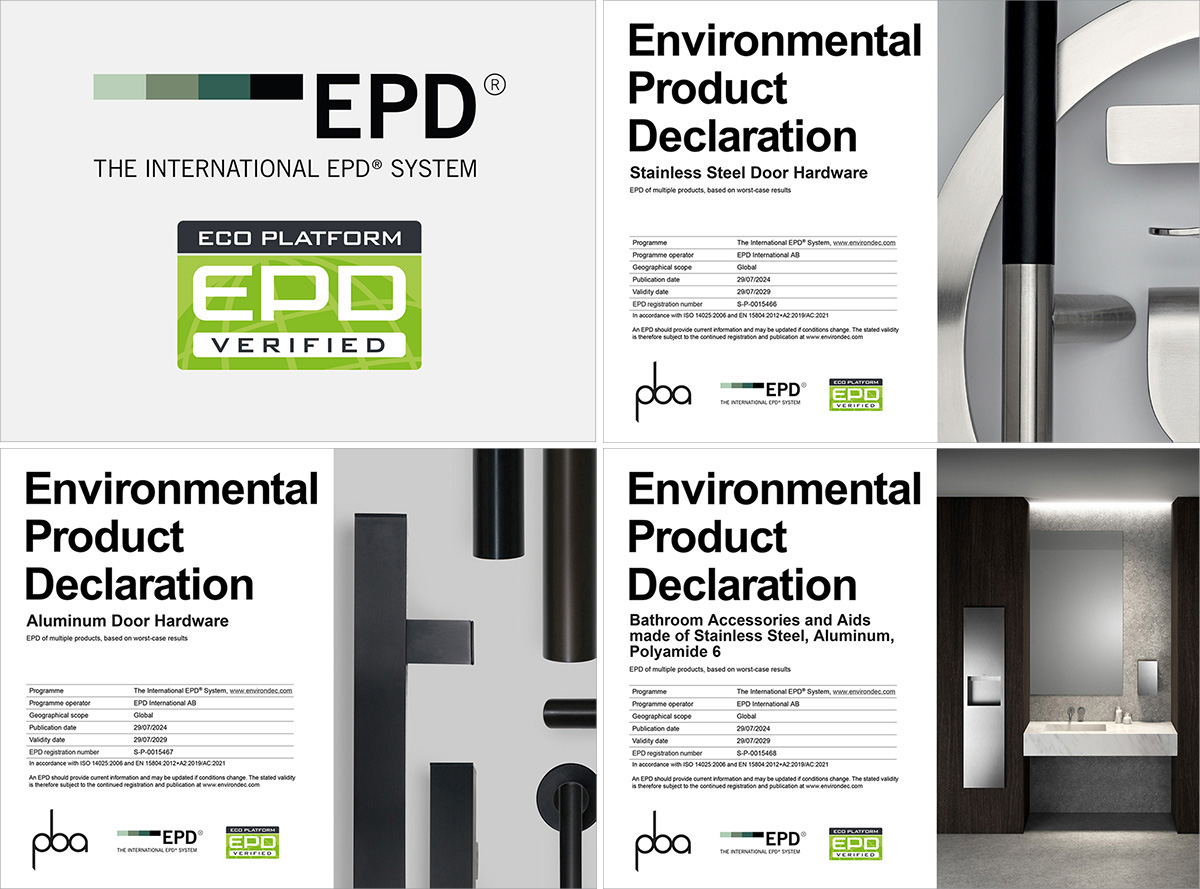
Les déclarations DEP de pba couvrent une grande variété de produits de la gamme des accessoires pour portes et fenêtres et des collections des accessoires pour salle de bain Design for All. Les déclarations incluent les accessoires pour portes en acier inox AISI 316L – https://www.environdec.com/library/epd15466, les accessoires pour portes en aluminium – https://www.environdec.com/library/epd15467, les différentes accessoires et supports de sécurité pour salle de bain en acier inox AISI 316L , aluminium et polyamide6 – https://www.environdec.com/library/epd15468.
“Nous sommes fiers d’avoir obtenu cette Déclaration Environnemental de Produit, c’est une réussite qui confirme notre engagement à minimiser l’impact environnemental des nos produits. Nous sommes convaincus qu’imaginer, développer, apporter dans le monde quelque chose qui n’existait pas engendre des conséquences infinies auxquelles il faut regarder avec un grand sens de responsabilité. Nous croyons également que , pour qu’il existe un avenir, il faut qu’il ait de la place. Pour que d’ autres puissent profiter de ce monde, nous devons, maintenant, renoncer à occuper toute l’espace.” déclare Francesca Masiero, Présidente de pba.
Les déclarations environnementales DEP de pba s’ajoutent aux autres déclarations et certifications de durabilité des produits que l’entreprise fournit pour aider les architectes dans les choix de projets afin d’atteindre les objectifs de durabilité et certification de bâtiments écologiques. Les produits pba sont conçus pour être entièrement démontés pour garantir la recyclabilité, ils sont réalisés avec des matériaux recyclables, ils contribuent à l’obtention de crédits LEED, ils sont conformes à la réglementation REACH et ils portent l’étiquette Declare Label Rest List Free, témoignant l’engagement de pba vers un future plus durable.
Aujourd’hui pba atteint ,avec la publication des déclarations DEP, une nouvelle étape dans son parcours de recherche et d’amélioration constante vers un monde plus inclusif et durable.
“La conception orientée vers un but précis (purpose-driven design) doit considérer l’impact environnemental dès la phase de conception : la façon dont un produit est conçu a un effet sur sa recyclabilité et sur l’ensemble de son cycle de vie en termes de coûts environnementaux. Il est essentiel de dissiper les mythes courants sur la durabilité ; à travers un procès de conception axé sur les objectifs, les entreprises peuvent optimiser la réduction des coûts et poursuivre la durabilité environnementale et sociale. La durabilité environnementale et l’inclusion sont étroitement interconnectées: il n’est plus le temps de réfléchir sur ces thèmes, il est le temps d’agir.” affirme Erica Anesi, PDG de pba.
Download our Stainless Steel Door Hardware EPD
Download our Aluminum Door Hardware EPD
Download our Bathroom Accessories EPD
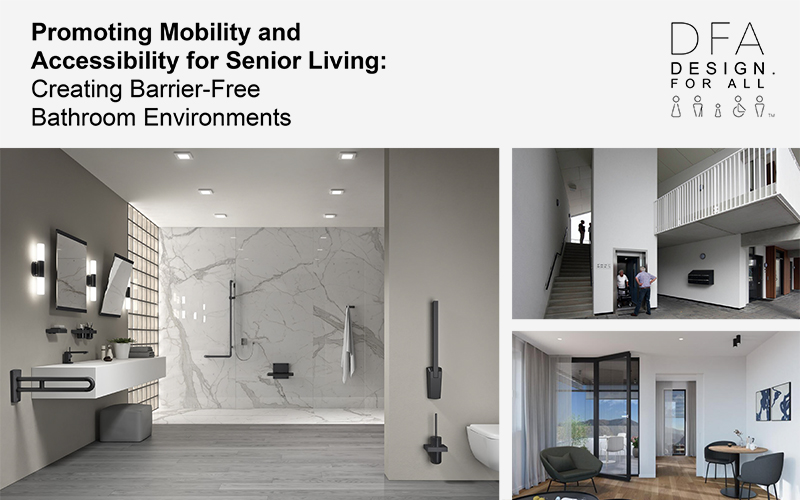
The Programma 400-ALU aluminum bathroom accessories and aids program demonstrates how elegant, thoughtfully designed products can enhance both the appearance and functionality of accessible spaces. Our barrier-free bathware accessories are thoughtfully designed to create inclusive environments that foster a life without barriers, blending functionality with aesthetic appeal. Our bathroom accessories help residents thrive by supporting personal health and creating a positive, health-conscious community environment.
Discover the 400-ALU Collection
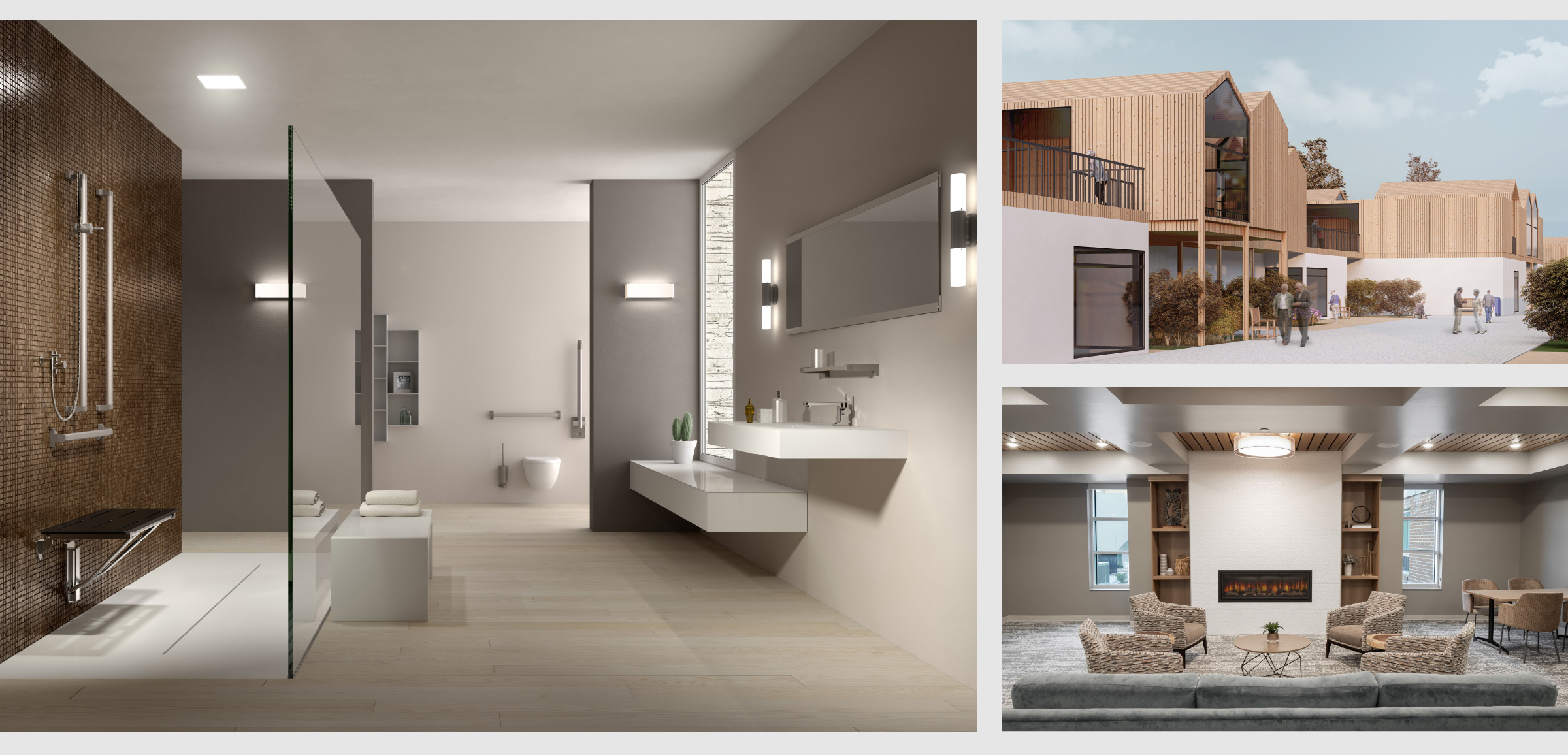
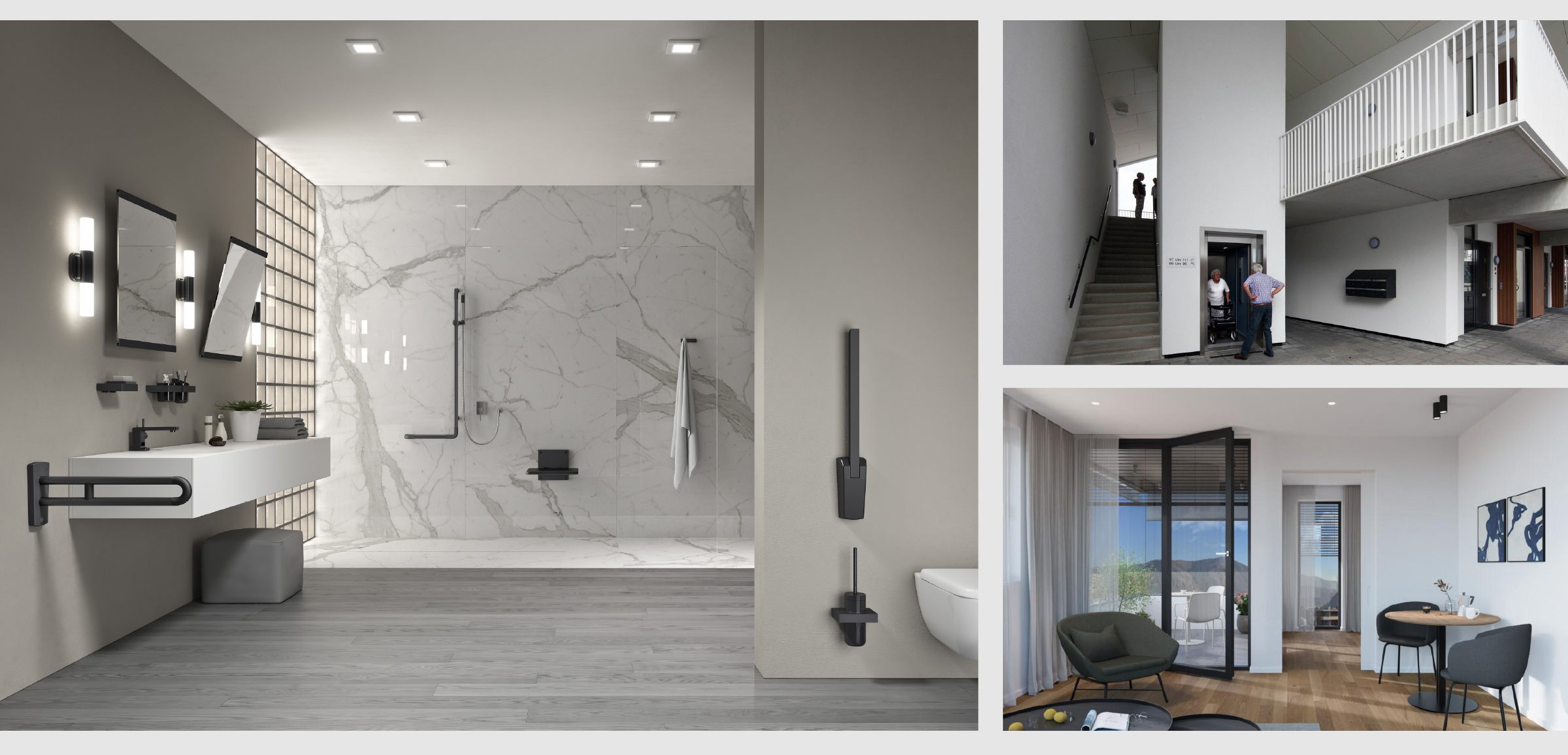
The Programma ART includes a wide range of bathroom accessories which give designer the opportunity to design accessibility without compromising between accessibility and beauty. Its scratch-resistant anodized aluminum bathroom accessories beautifully support inclusion while adding to the space’s aesthetic appeal. One of the key principles in senior living architectural design is creating spaces that promote mobility. Seniors thrive in environments that encourage movement and physical activity. Designing wide hallways, open spaces, and easily accessible amenities helps seniors stay active and promotes better health.
Enriching Lives Through Design:
The Evolution of Senior Living Spaces
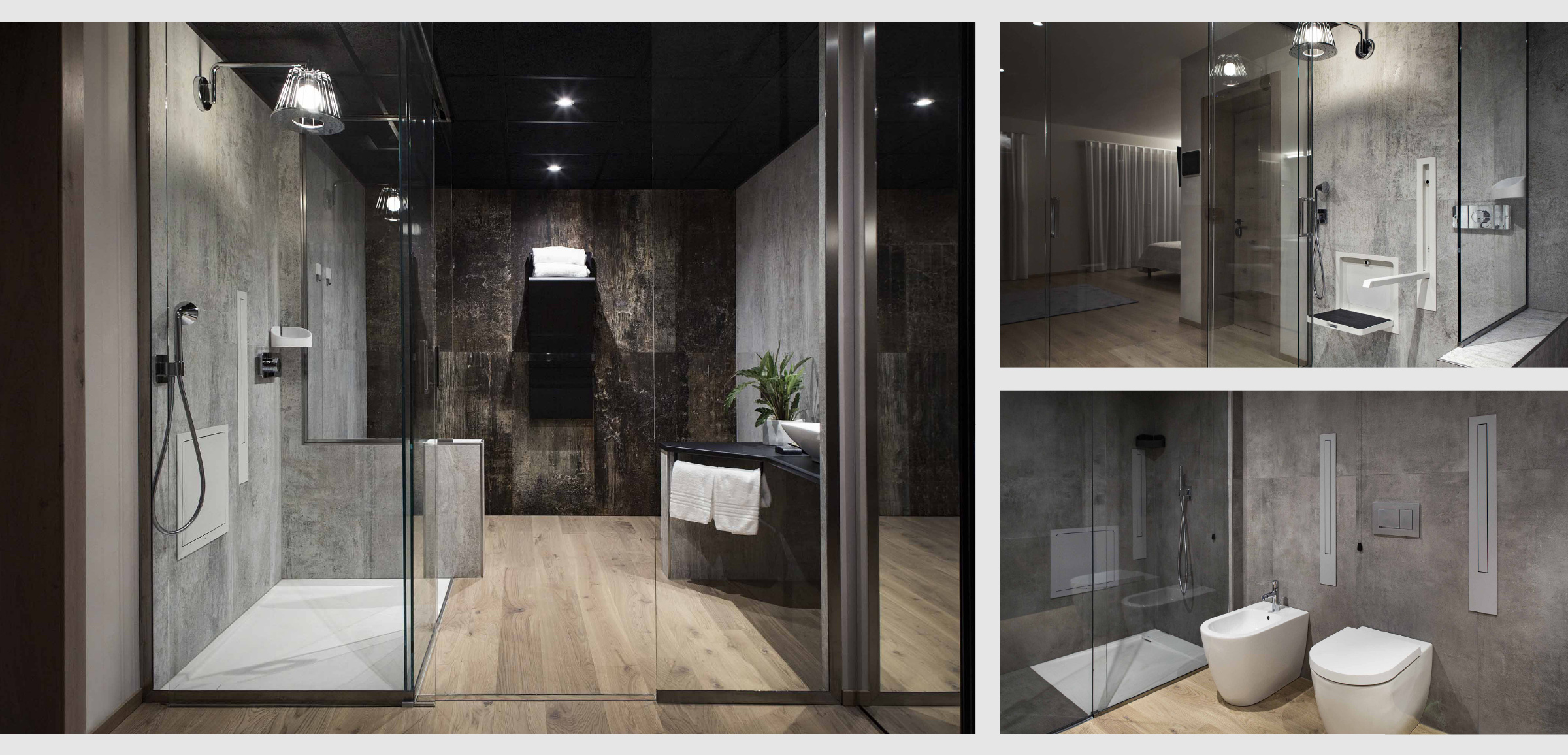
CAP is a collection of folding bathroom accessories made from coated aluminum that, when not in use, seamlessly disappear from view. It is this “disappearance” that highlights their true purpose. The design is truly inclusive, as it doesn’t cater to a specific user profile but instead prioritizes the free movement of all individuals, enhancing the overall interior without compromise. New senior living residences have evolved into modern, luxurious, and inviting spaces for residents to call home. Today’s luxury is defined by simplicity—crisp, clean lines and sleek, contemporary finishes that create a sense of elegance and comfort. The new generation of seniors expects nothing less than modern, sophisticated design and high-end amenities.
Discover our Solution for Independent and Community Living:
Download Senior Living Brochure
Project: Commonwealth Pier
Architects: CBT Architects
Location: Boston – USA
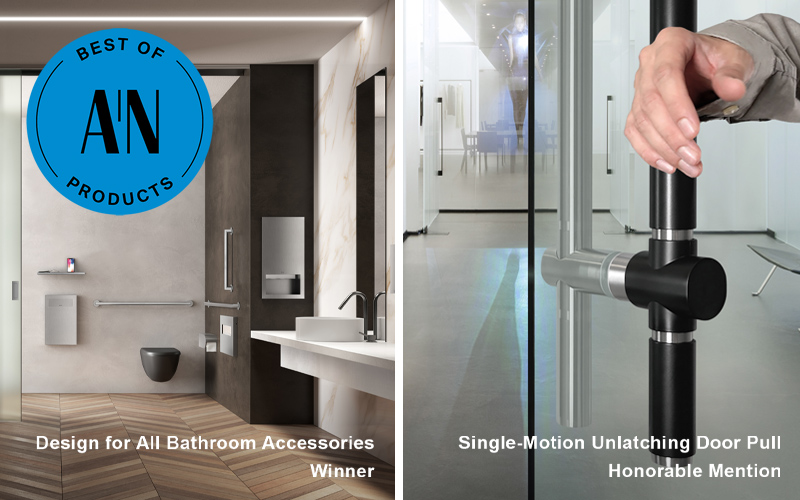
The Architect’s Newspaper announced pba as the winner of the Appliances + Plumbing: Bathroom Category for its Design For All Bathroom Accessories, and the recipient of an honorable mention in the Hardware: Architectural Category for its Single-Motion Unlatching Door Pull, as part of the 2024 Best of Products Awards.
The Architect’s Newspaper’s Best of Products Awards acknowledges the leading manufacturers, designers, engineers, and artisans whose inventions are crucial to the built environment. AN’s awards program celebrates the vast and ever-evolving industry of architectural products, as it’s these that allow architects to build better and bigger projects that can more precisely respond to the world around them.
A consideration for how products operate within a larger ecosystem was a common theme that united many of the winners picks this year. This includes a consideration for the global climate crisis, an issue that prompted designers to devise creative and affordable alternatives and solutions. Beyond sustainability, this year’s winners carefully reflected on how products and building materials influence lifestyle choices, from health and nutrition to hygiene and sanitation habits.

pba developed the Design for All Bathroom Accessories Collection – AN’s Best of Products Winner – to design public spaces that balance practical use and beauty without compromise.
The collection is an expression of materiality and form at its purest. Crafted by hand of AISI 316L stainless steel – the hardest, most resistant, and most elastic of steels – maximum attention was given to creating minimal shapes with refined details, all to reduce visual clutter and to deliver an elevated and user-friendly experience.
From the absence of flanges and exposed hinges to a trademark reveal that imparts a discernible lightness and makes installation on uneven surfaces more forgiving, every item in the range brings an incomparable elegance and sense of modernity to the restroom environment. Conceived to blend into a space rather than to distract the eye, and a step away from the institutional look common to the market, Design for All was developed to support inclusion beautifully.
“Understated and also very utilitarian—but in a more of a minimal, designed way. It wasn’t necessarily bringing so much attention to it, just acknowledging that this is what I am, and this is what I do.” says Brian Messana, Member of the Award Jury and Cofounder Messana O’Rorke.
Related in form and finish, pba‘s new range of Design for All Bathroom Accessories allows designers to source everything they need from one place, ensuring a more unified and seamless integration within spaces. This approach ensures that all users, regardless of physical abilities or limitations, feel included and respected, enjoying the same consideration for their needs and autonomy as everyone else. Designed for all, the collection enhances not only the bathroom experience but also promotes greater inclusivity.
” We are honored to receive these 2024 AN’s 2024 Best of Products Awards. From an inclusive design perspective, the challenge lies in creating more inclusive restrooms with solutions that are both unique and accessible to all. Our goal is to design products that, while originating from the same mold (identical for all), can meet diverse needs. Accessibility is the right to access. When a product fails to provide this, it falls short of being a truly good product.” says Francesca Masiero, President of pba.
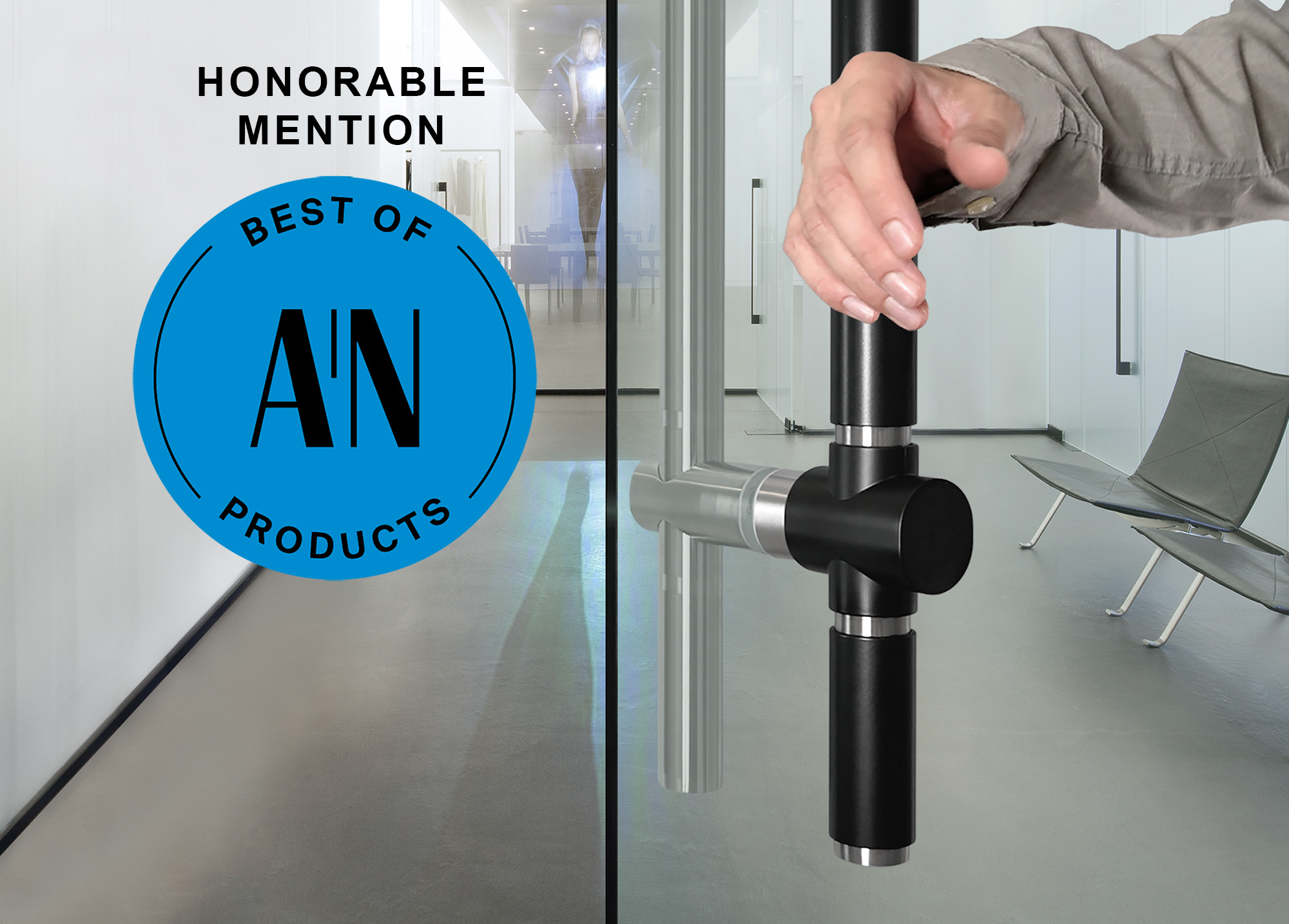
pba also received an honorable mention in the Hardware: Architectural Category for its Single-Motion Unlatching Door Pull, a life-safety hardware that secures glass, wood, and metal swing doors with ultra-easy installation and simple, intuitive use. Ideal for most any type of security door that does not require panic hardware, a gentle push on the exit side grip is all that is required to release the latch and open the door. Operable with a key or electronic card reader on the entry side, the pull requires no electronic sensor or release button on the egress side.
Single-Motion Unlatching Door Pull unlatches and opens the door with a single movement using the Activation Area, easily operable with one hand, without tight grasping, pinching or twisting of the wrist. The Activation Area includes the Grip in powder coated aluminum or leather wrapped and the Push Coupler in ECONYL® regenerated nylon, from waste such as fishing nets, old carpets destined for landfills, plastic components and fabric scraps from mills. As well as being a solution on waste, ECONYL® is also better when it comes to climate change. It reduces the global warming impact of nylon by up to 90% compared with the material from oil.
pba is committed to manufacturing sustainable and recyclable hardware and bathware. The Design for All Bathroom Accessories and the Single Motion Unlatching Door Pull are designed for easy disassembly, allowing for the recycling the individual components at end of their life cycle. The collections have an Environmental Product Declaration (EPD), contribute to LEED requirements and hold a Declare Red List Free label, all contributing to a sustainable future.
All products in these collections meet ADA requirements and are suitable for installations that need to comply with ADA and similar accessibility standards.
pba collaborated with Gensler, serving as product design consultant, in developing these groundbreaking products.
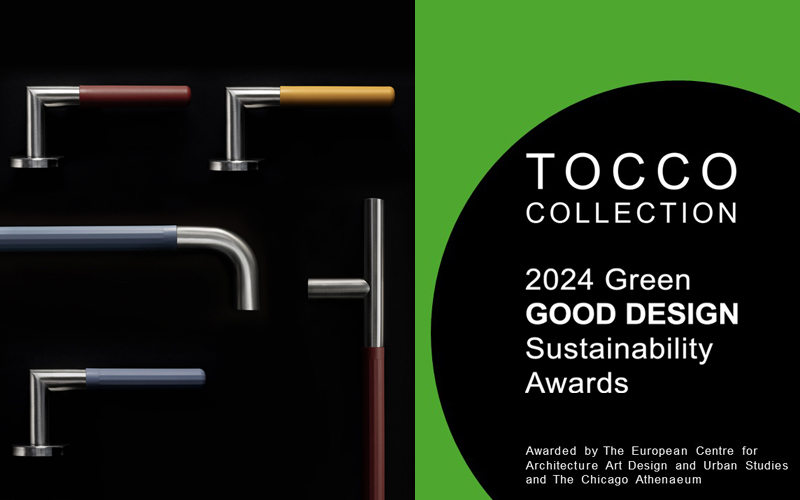
The European Centre for Architecture Art Design and Urban Studies and The Chicago Athenaeum: Museum of Architecture and Design announced pba TOCCO Collection has won a 2024 Green GOOD DESIGN® Award.
TOCCO was previously honored with the Interior Design Magazine NYCxDESIGN Award in May in the Architectural Products Category.
Today the sensory inclusive and sustainable TOCCO hardware collection received the 2024 Green GOOD DESIGN® Award. The award recognizes the collection’s contribution to sustainable development, highlighting its environmental, social, and economic characteristics within a diverse context of international excellence.
Green GOOD DESIGN 2024 awarded architecture, landscape architecture, urban planning projects, products, packaging, and graphic designs from over 32 nations, representing the world’s most important manufacturers and design firms and leading FORTUNE 500 corporations that are forwarding a new emphasis on a more sustainable design and environment worldwide.
This is the 16th year that the institutions have developed this very specialized edition of the original GOOD DESIGN program, which was founded in Chicago in 1950 by Eero Saarinen and Charles and Ray Eames.
Green GOOD DESIGN identifies and emphasizes the world’s most important examples of sustainable design and to develop a public awareness program to the general public about which global companies are doing the best job ecological and sustainable design for our world environments.
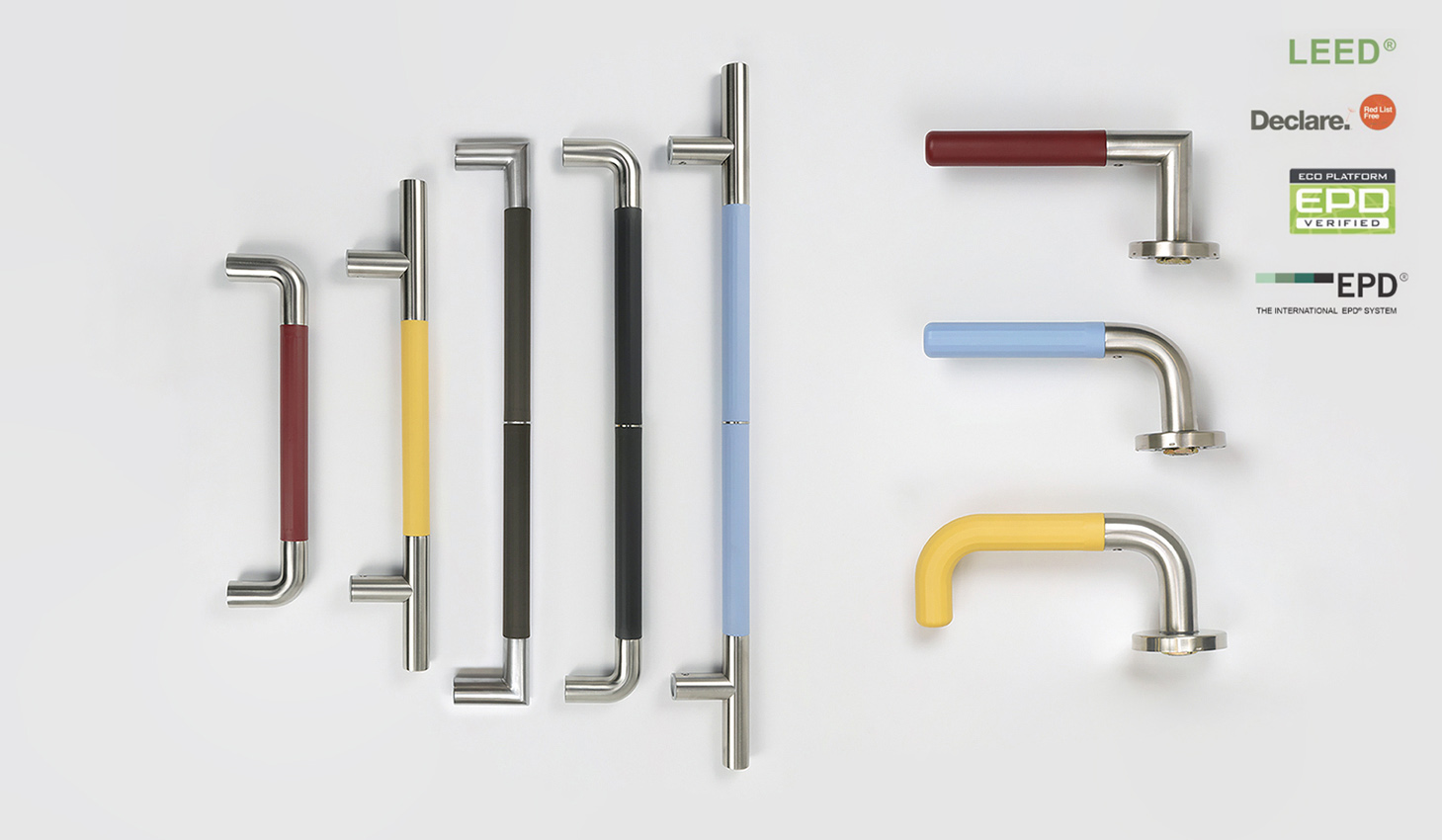
The TOCCO Collection offers nearly infinite color options (visual preferences), as well as two grip textures (tactile preferences), ensuring the design of highly inclusive spaces for all users. The levers and pulls grips in the collection are made of ECONYL® regenerated nylon, which is not only environmentally sustainable but also interchangeable allowing spaces to be adapted to users’ needs and offering a better thermal comfort by maintaining a temperature similar to the environment.
“We are honored to be recipients of these Green GOOD DESIGN® Awards,” says Francesca Masiero, President of pba. “We need to take a step back, and give up the idea of filling the whole space to make room for something else: other needs, other cultures, other desires. Because the Earth and its resources are not something we inherited from our fathers, but something we are borrowing from our sons.”
Committed to the goals of sustainable development and environmental and social sustainability – inclusivity; given that sustainability cannot ignore the centrality of the individual, pba is advancing sustainable and inclusive practices within the design industry.
“When we design spaces, we must think about the way people perceive and interact with the environment. We must also think about how the things we create can impact the planet, from how materials are sourced, to where they end up at the end of their service life”. Tocco is not a finished collection, is the idea that we should be all committed to push ourselves out of our comfort zone questioning not if, but how we can make a difference in the built environment for our planet today and tomorrow, and for all people looking at diversity as a resource not as a limit, says Erica Anesi, CEO of pba.