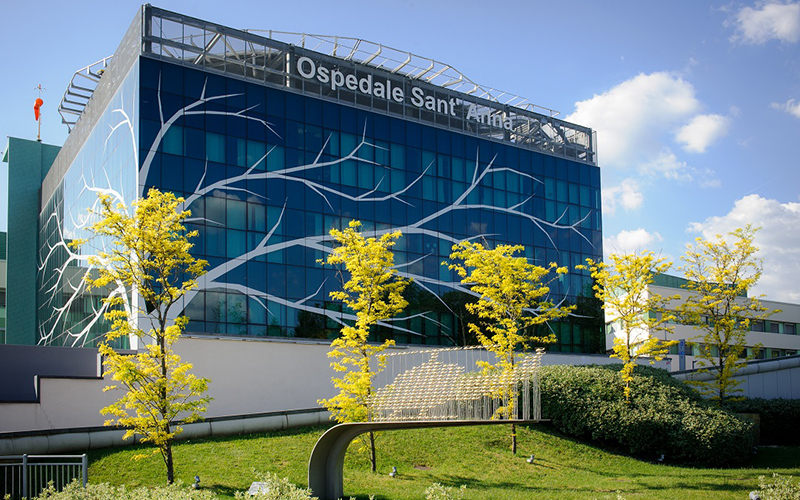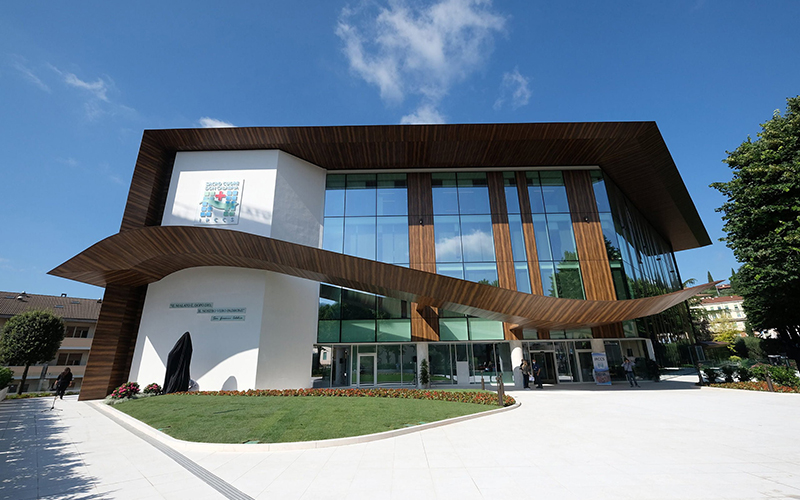
Ospedale Sacro Cuore Don Calabria
Verona
Italy

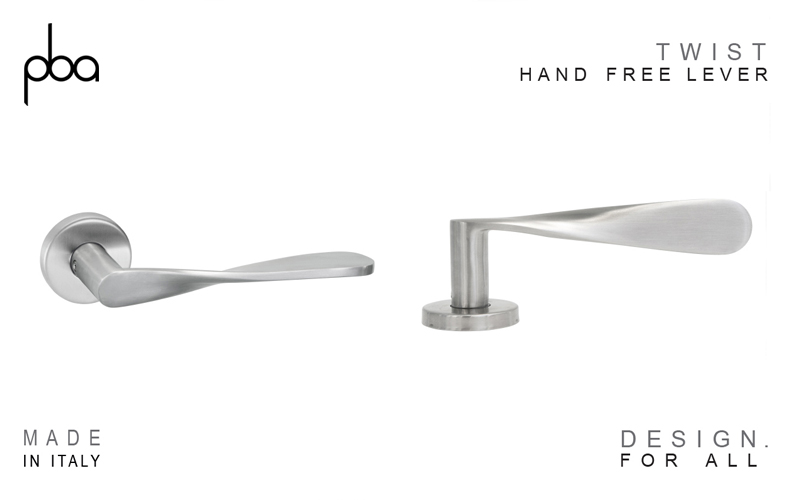
The hand-free Twist lever is designed to open the door without using the hand. The twisted shape of the lever offers a good support base for both the elbow or the arm and facilitates the opening operation
DESIGN FOR ALL
The Twist lever, thanks to the large support, guarantees a good grip and easy handling, even for a person who has difficulty controlling movements or in wheelchairs.
VERTICAL INSTALLATION FOR SLIDING DOOR Installed vertically on sliding doors it allows a practical opening of the door, using instead of the hand the elbow or the arm. The hand-free Twist lever can be used both for new projects, in combination with pba mortise locks series 2MM.LCK, or to replace existing levers, thanks to its compatibility with most brands of USA mortise locks. Contact our offices for the compatibility of the Twist lever with the different brands and functions of USA mortise locks.
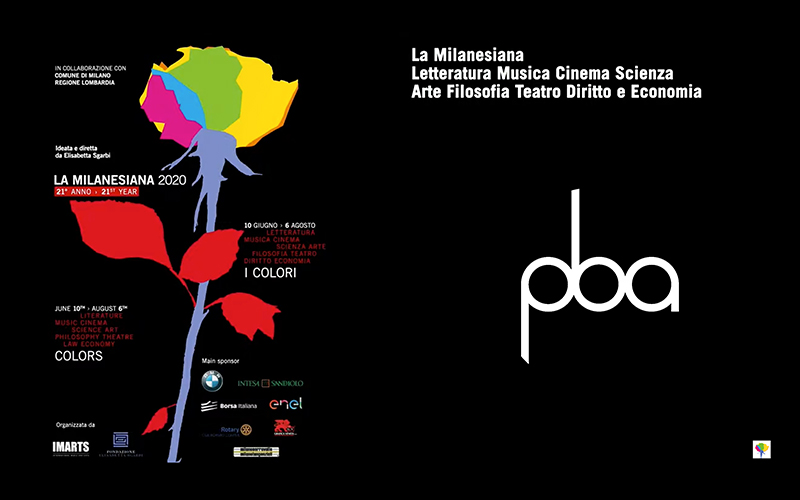
Literature Music Cinema Science Art Philosophy Theatre Law and Economy
Ideata e diretta da Elisabetta Sgarbi
Milano | 10 giugno – 06 Agosto 2020
La XXI edizione si terrà dal 10 giugno al 6 agosto con oltre 40 incontri, 115 ospiti italiani ed internazionali, 5 mostre 12 città e un tema, quello scelto da Claudio Magris, ‘I Colori’.
La kermesse sarà aperta il 10 giugno con una serie di appuntamenti di ‘Aspettando La Milanesiana’ in collaborazione con Corriere.it. Il 10 giugno in streaming ci saranno Thomas Piketty in dialogo con Ferruccio De Bortoli sui temi presenti nel nuovo saggio dell’economista, ‘Capitale e Ideologia’ edito da La Nave di Teseo. Un appuntamento in collaborazione con la Fondazione Giangiacomo Feltrinelli.
Il 15 e 16 giugno due incontri in streaming avranno come protagonista lo spazio e la scienza con gli astronauti italiani Samantha Cristoforetti e Luca Parmitano e due lectio sui colori dello spazio.
A Milano dal primo luglio al via gli appuntamenti dal vivo, con ingresso libero fino a esaurimento posti, con lo spettacolo di Massimo Lopez e Tullio Solenghi nel cortile del Castello Sforzesco.
Il cortile di Palazzo Reale ospiterà il 27 luglio ‘I colori della nostra vita. Questo virus che rende folli’, spettacolo di Bernard – Henri Lévy introdotto da Maurizio Molinari.
Il 29 luglio nel chiostro del Piccolo Teatro Grassi andrà in scena una lettura collettiva di La Tregua di Primo Levi.
Il 25 luglio il cortile di Palazzo Reale ospiterà ‘I Colori di Fabrizio De André’, la proiezione del documentario di Walter Veltroni ‘Fabrizio De André e Pfm – Il concerto ritrovato’, con letture di Dori Ghezzi e dello stesso Veltroni.
A Casalpusterlengo, in provincia di Lodi nella ex zona rossa, il 15 luglio Vittorio Sgarbi terrà una lectio sui tesori dell’arte di Lodi, Codogno e Casalpusterlengo.
A Sant’Arcangelo di Romagna il 4 agosto Vittorio Sgarbi terrà una lectio illustrata su Guido Cagnacci, Tonino Guerra e Federico Fellini, con il prologo musicale degli Extraliscio che hanno realizzato anche la nuova sigla della rassegna.
Il 30 luglio al Museo Madre di Napoli si terrà l’apertura della mostra ‘Nuvole e colori’ che raccoglie alcune fotografie di Carlo Verdone, attore e regista, che dialogherà per l’occasione con Paolo Mereghetti.
More information http://www.lamilanesiana.eu
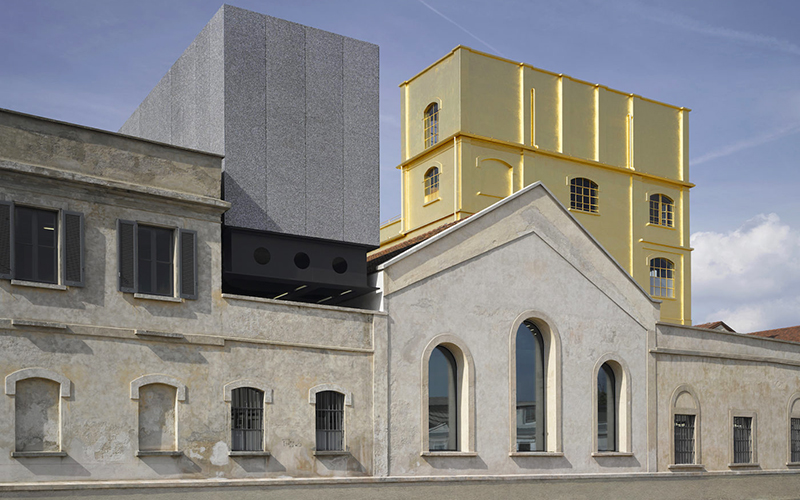
Project: Osservatorio Fondazione Prada
Architects: Prada and OMA – Office for Metropolitan Architecture
Location: Milano – Italy
Nowadays we must be proactive to create healthier environments with reduced opportunities to transmit germs and viruses.
pba® new series CU + Stainless steel demonstrates that an important aid to the problem to reduce contamination and to have cleaner and healthier environments, is offered by using product with elegant and contemporary design, made with the best grade of material.
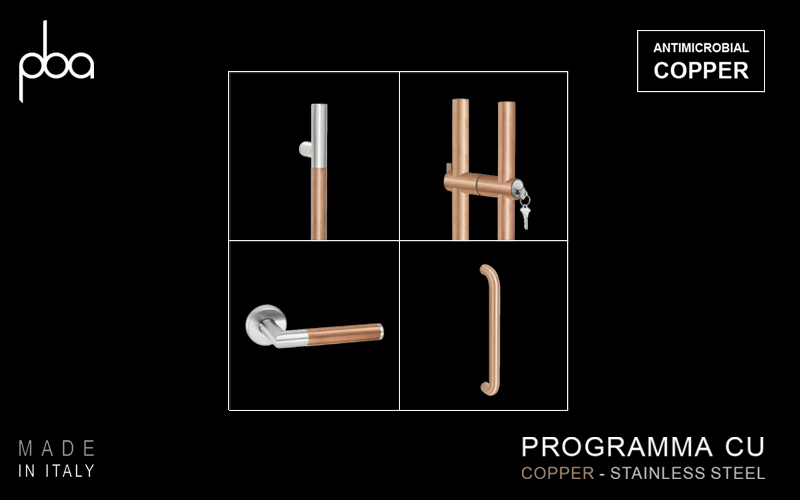
In the CU + Stainless steels series designers can chose pulls, levers, locking and non-locking ladder pulls, lockset for glass door in pure copper (99.9%) or pure copper and 316L stainless steel for glass or solid doors and windows.
We designed the series combining the best stainless steel grade 316L and the best antimicrobial material, copper, to produce high quality products in terms of mechanical and quality properties with the antimicrobial defense against a range of pathogens, including MRSA, S. Aureus (A.K.A. Staph) and E. Coli that only copper can offer.
The New England Journal of Medicine recently reported that copper, when compared to other materials is also dramatically less hospitable to virus. CU + Stainless steel products can be consider part of a plan for a cleaner, more hygienic environment, especially for high-touch, multi occupant spaces such as offices, meeting room, hotels and healthcare.
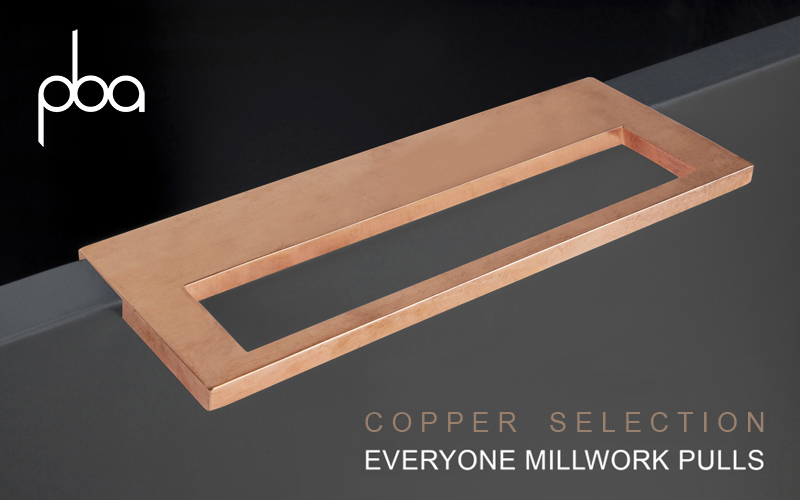
Everyone Millwork Pulls from pba have become a go-to solution for interiors professionals and cabinetmakers since their 2018 introduction. Originally offered and still available in top-grade stainless steel, they meet the ada accessibility requirements and support inclusion beautifully.
Now our pulls are better than ever with a brand new option: copper plating, where an alloy consisting of 97% pure copper is applied without coating to a steel core to create an always-on, antimicrobial defense against a range of pathogens including MRSA, S. Aureus (A.K.A. Staph), and E. Coli.
The New England Journal of Medicine recently reported that copper, when compared to other materials including plastic and stainless steel, is also dramatically less hospitable to virus. With all this and good looks, too, pba copper millwork pulls can be part of a comprehensive plan for a cleaner, more hygienic environment—and especially relevant in high-touch, multi-occupant spaces such as kitchens, pantries, meeting rooms, and hotel guest rooms.
Note: all products comply with the ada and similar accessibility requirements, however final interpretation of accessibility compliance is the responsibility of the specifier and should be determined according to specific project conditions and local codes.
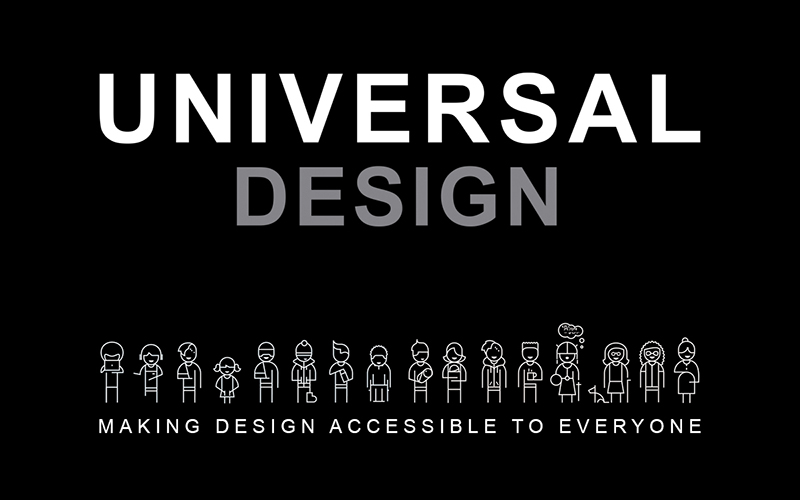
MAKING DESIGN ACCESSIBLE TO EVERYONE
At pba we strongly believe that the form of an object not only establishes its function, but it also gives a clear indication of how the designers look at the world. Nowadays there can’t be any human activity, including the design of a new object, that doesn’t take into consideration the responsibility of its effect and of its consequences on the world.
We declare our intention to continuously pursue sustainability and accessibility of what we do with an even wider and more durable approach. The products we design and manufacture for a “life without barriers” must fulfill inclusion and accessibility and are considered a success only if they are intended to be for everyone: not for a particular category of users, but for all men and women living in a comfortable space.
The Design For All bathroom accessories and the many products of our Architectural Hardware range are designed with the purpose to be inclusive: our wish is to make excellence accessible to everyone.
According to the Centre for Excellence in Universal Design, Universal Design is the design and structure of an environment that can be understood, accessed, and used to the greatest extent possible by all people, regardless of their age or ability.
That means that when designers think about and plan around people’s diverse needs and abilities, they can create products and environments that actually meet those needs and abilities.
In 1997, Ronald Mace led a working group of architects, product designers, engineers, and environmental design researchers, to create the 7 principles of universal design to help guide the design process of environments, products and communications.
Principle 1: Equitable Use. The design is useful and marketable to people with diverse abilities.
Principle 2: Flexibility in Use. The design accommodates a wide range of individual preferences and abilities.
Principle 3: Simple and Intuitive Use. Use of the design is easy to understand, regardless of the user’s experience, knowledge, language skills, or current concentration level.
Principle 4: Perceptible Information. The design communicates necessary information effectively to the user, regardless of ambient conditions or the user’s sensory abilities.
Principle 5: Tolerance for Error. The design minimizes hazards and the adverse consequences of accidental or unintended actions.
Principle 6: Low Physical Effort. The design can be used efficiently and comfortably and with a minimum of fatigue.
Principle 7: Size and Space for Approach and Use. Appropriate size and space is provided for approach, reach, manipulation, and use regardless of user’s body size, posture, or mobility.